

The best time to prune most trees and shrubs in Rhode Island is late winter, between mid-February and late March, while plants are still dormant. But that rule only covers about 60% of what’s in your yard. The other 40% follows different timing, and getting it wrong means lost blooms, disease entry, or winter kill.
Rhode Island sits in USDA Hardiness Zones 6a through 7a. Coastal Newport stays milder while inland areas near the Connecticut border run colder. That range matters because it shifts when dormancy ends and new growth begins. National pruning calendars written for Zone 5 Minnesota don’t apply to a property in Narragansett. This guide covers when to prune every major plant category in Rhode Island, by month, with the reasoning behind each window.
When Should You Prune Deciduous Trees in Rhode Island?
Prune deciduous trees between mid-February and late March. They’re dormant, the branch structure is visible without leaves, and wound compartmentalization starts quickly once spring growth resumes. The ISA recommends removing no more than 25% of live canopy per session. Go past that and you’ll trigger weak regrowth with long-term structural problems.
Storm damage is the exception. Remove hanging branches immediately regardless of season. Outside emergencies, avoid pruning during spring leaf-out (April through early May) and fall leaf drop (October through November). Both are high-stress periods.
Why Are Oaks the Exception?
Prune oaks only from December through February. Oak wilt, a lethal fungal disease, spreads via sap-feeding beetles active from March through October. If storm damage forces a summer cut, paint the wound immediately with latex house paint. This is outdated advice for most species, but for oaks it’s non-negotiable because the paint blocks beetle access.
How Do You Prune Evergreen Trees?
Pines, spruces, and firs need minimal pruning. Remove dead or broken branches any time. For shaping, work in late February through early March.
Spruce and fir have lateral buds on new growth. Cut back to those buds in early spring for denser growth. Pines are different. They grow only from terminal buds, the “candles” that elongate in spring. Pinch candles back by half when they reach 2 to 3 inches, usually in April. Never cut a pine branch back to bare wood. It won’t regrow. That’s one of the common landscaping mistakes that causes permanent damage.
What’s the Best Time to Prune Deciduous Shrubs?
This depends entirely on when the shrub blooms. Generic “prune in late winter” advice gets homeowners in trouble here.
Spring-Flowering Shrubs (Lilac, Forsythia, Azalea)
Prune immediately after flowering, typically late May through mid-June in Rhode Island. These bloom on last year’s growth. Prune them in February and you cut off every bud. Penn State Extension research confirms this timing for Zones 6 and 7.
Summer-Flowering Shrubs (Potentilla, Spirea, Butterfly Bush)
Prune in late February through early April. They bloom on new wood, so cutting them back before spring actually encourages stronger flowering. Butterfly bush is the textbook case: cut to 12 inches every March and it comes back fuller.
Shrubs Grown for Foliage or Bark
Burning bush, red-twig dogwood, and similar plants don’t produce showy flowers. Prune in late February or March before growth starts. No bloom timing to worry about.
How Do You Fix an Overgrown Shrub?
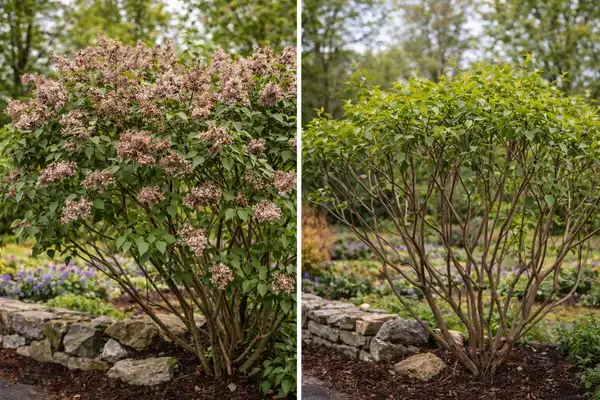
Rejuvenation pruning (cutting the whole shrub near the ground) works best in late March or early April. Spring bloomers won’t flower for 2 to 3 years after. If that gap is too long, remove one-third of the oldest stems each year instead. A seasonal advisory plan helps map out this phased approach.
When Do You Shear Formal Hedges?
Shear deciduous hedges (privet, barberry) starting in May. Second shearing in July if needed. Stop after mid-July so new growth can harden before Rhode Island’s first frost in mid-October.
Contrarian take: most deciduous shrubs shouldn’t be sheared into formal hedges. Shearing destroys natural form and reduces interior leaf growth. Only privet and barberry truly respond well to repeated formal shearing.
Why You Should Never Prune Shrubs in Fall
August or September pruning triggers a late flush of soft growth that won’t harden before freezing temperatures arrive. Professional arborists across the Northeast consistently call fall pruning the most common timing mistake homeowners make.
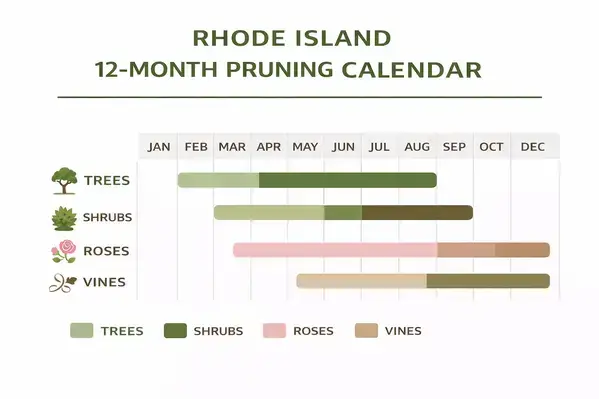
Rhode Island Pruning Calendar: 2026 Quick Reference
Pin this to your fridge or share it with your plant and tree care team.
| Plant Type | Best Pruning Window | Avoid |
| Deciduous trees | Mid-Feb – late March | Apr–May, Oct–Nov |
| Oak trees | Dec – February | Mar–Oct (oak wilt) |
| Evergreen trees | Late Feb – early March | Late summer, fall |
| Spring-flowering shrubs | After bloom (late May–June) | Feb–March |
| Summer-flowering shrubs | Late Feb – early April | After mid-July |
| Non-flowering shrubs | Late Feb – March | Aug–Sept |
| Evergreen shrubs | Late March – early April | Fall |
| Formal hedges | May + July | After mid-July |
| Fruit trees | Late Feb – early April | After bud break |
| Roses (hybrid tea) | Late March – mid-April | Fall |
| Hardy shrub roses | March – early April | Fall |
| Clematis (new wood) | Mid-March – mid-April | Summer |
| Clematis (old wood) | After flowering (May) | Winter |
How Should You Prune Evergreen Shrubs?
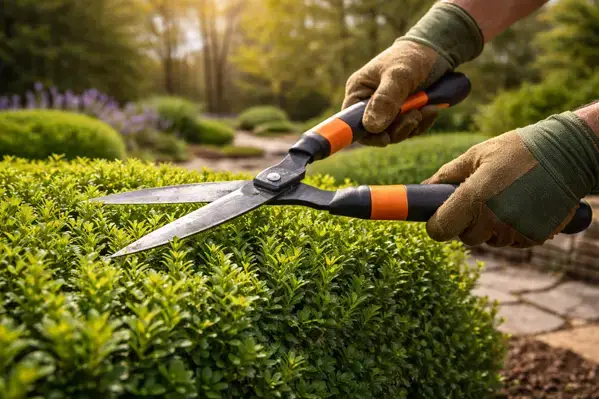
Junipers and yews get pruned in late March or early April. Light touch-up is fine mid-summer. Never prune in fall. Fall-pruned evergreens are vulnerable to winter burn, and Rhode Island’s freeze-thaw cycles from December through February are punishing.
Boxwoods take a beating in harsh Rhode Island winters. Wait until mid-April to prune dead growth so you can see what survived. Shape lightly through mid-summer, stop by August. Properties where fine gardening standards matter should factor boxwood vulnerability into any formal planting. Working with an experienced landscape partner who knows these regional patterns saves years of trial and error.
When to Prune Fruit Trees in Rhode Island
Late February through early April, before bud break. This applies to apples, pears, peaches, plums, and woody-stemmed small fruits like grapes and blueberries. Professional tree pruning in Rhode Island runs $403–$598 per tree according to 2025 Angi data. For anything over 15 feet, the cost of professional care beats the risk of a bad cut forcing full removal at $1,000–$2,500 a few years later.
What About Pruning Roses in Rhode Island?
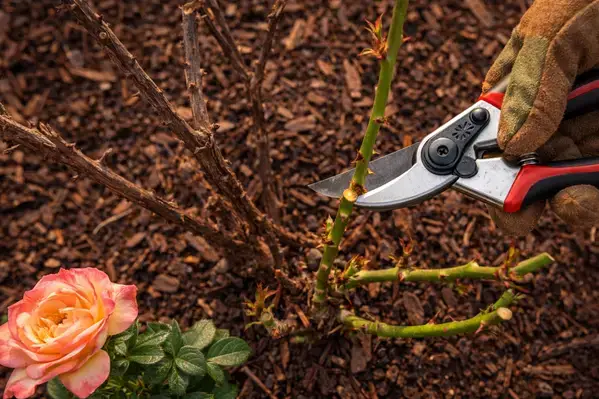
Hybrid teas and floribundas almost always suffer winter dieback here. Remove dead wood after pulling winter protection, late March through mid-April. Hardy shrub roses that bloom once go right after flowering. Repeat bloomers get pruned in March or early April. A smart landscape design places roses where winter exposure and air circulation are managed from the start.
How Do You Prune Vines and Clematis?
Most vines get pruned late February through early April. Wisteria goes immediately after bloom.
Clematis Group 1 (new wood): Cut to 6–12 inches in mid-March through mid-April. Jackmanii is the most common example.
Clematis Group 2 (old wood): Only prune dead wood after the vine leafs out. Heavy winter cuts kill the bloom.
Clematis Group 3 (both): Blooms twice. Treat like Group 2. Let it leaf out, then remove dead wood.
Don’t know your group? Let it grow one full season and watch where flowers appear.
The Bottom Line on Pruning in Rhode Island
Bloom timing determines pruning timing for shrubs. Dormancy determines it for trees. Get those two rules right and you’ll avoid 90% of mistakes that lead to lost blooms, disease, or winter kill. When you’re unsure, start with the calendar above. For larger trees or complex properties, bring in a team that understands Rhode Island’s growing conditions well enough to adjust timing property by property.
Frequently Asked Questions
Can I prune trees and shrubs in the fall in Rhode Island?
Avoid fall pruning for most plants. Cuts made in August or September trigger soft new growth that won’t harden before freezing temperatures hit, typically mid-October in Rhode Island. The exception is removing dead or hazardous branches, which should happen immediately regardless of season.
How much of a tree can I safely prune at one time?
The ISA and TCIA recommend removing no more than 25% of live canopy per session. Going beyond that shocks the tree and triggers weak regrowth. For mature trees, 15–20% is a safer target.
Should I seal pruning cuts with wound paint?
For most trees, no. University extension research shows sealants slow natural healing. The exception is oak trees pruned during warmer months. Latex paint applied immediately blocks sap-feeding beetles that spread oak wilt.
What is the difference between pruning and trimming?
Pruning is structural and health-focused, removing branches to improve form and airflow. Trimming is cosmetic shaping. Improper trimming, especially topping, creates weak regrowth and can cost $1,000–$2,500 to correct through later removal.
Do I need an ISA-certified arborist to prune my trees?
For small shrubs and trees under 10 feet, most homeowners can handle it. For trees above 15 feet or structural work, ISA certification means the arborist follows ANSI A300 standards and carries liability insurance. In Rhode Island, professional pruning averages $403–$598 per tree.
Does climate change affect pruning timing in Rhode Island?
Yes. Warmer winters are shortening dormancy and pushing bloom times earlier across Zones 6 and 7. Watch local bud development rather than relying strictly on calendar dates. A warm February can shift bud break two to three weeks earlier than average.
When should I prune hydrangeas in Rhode Island?
Old-wood hydrangeas (bigleaf, oakleaf) go right after summer flowering. New-wood types (panicle, smooth) get pruned in late February or March. Pruning a bigleaf hydrangea in winter removes next summer’s buds entirely.