

Garden edging ideas range from free hand-cut borders to premium stone installations, and the right choice depends on your climate, soil type, and how much weekend maintenance you can stomach. The best garden edging keeps grass out of your beds, holds mulch after storms, and gives your mower a clean line to follow.
Garden edging is any material or technique that creates a defined border between a lawn and a planting bed. Options include natural stone, metal strips, brick, plastic, living plant borders, and simple hand-cut trenches. The most durable choices for cold climates are stone and metal. Warmer regions have more flexibility with wood, terracotta, and recycled rubber.
I’ve installed or supervised edging on more properties than I can count. The single biggest mistake I see? People pick based on looks alone and ignore what their climate will do to that material in 18 months. Every option below gets an honest durability note. This article won’t cover retaining walls, raised bed construction, or full hardscape design.
Why Does Garden Edging Matter More Than You Think?
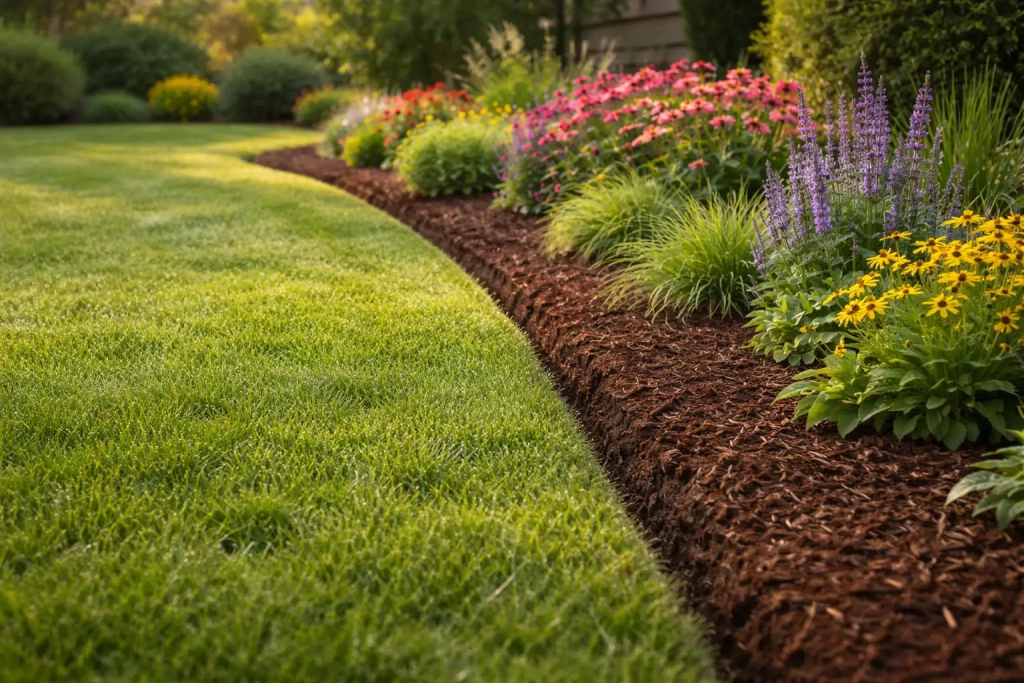
Edging solves three problems most homeowners don’t consider until they’re frustrated. It stops grass stolons from invading your beds. It keeps mulch from washing into your lawn after heavy rain. And it gives your mower a physical boundary so you skip the hand-trimming.
The time savings alone are worth it. Properties with clean edging cut 15–20 minutes off every mow session. Over a full growing season, that’s hours you don’t spend sweating with a string trimmer.
There’s a less obvious benefit, too. According to NALP’s 2026 design trends report, homeowners are shifting toward durable natural materials like stone and gravel for long-term value. Edging fits that shift because a well-installed border lasts years with minimal upkeep. If you’re already thinking about designing a low-maintenance yard, edging is one of the highest-impact places to start.
Free and Almost-Free Garden Edging Ideas
Hand-Cut Edging (The English Method)
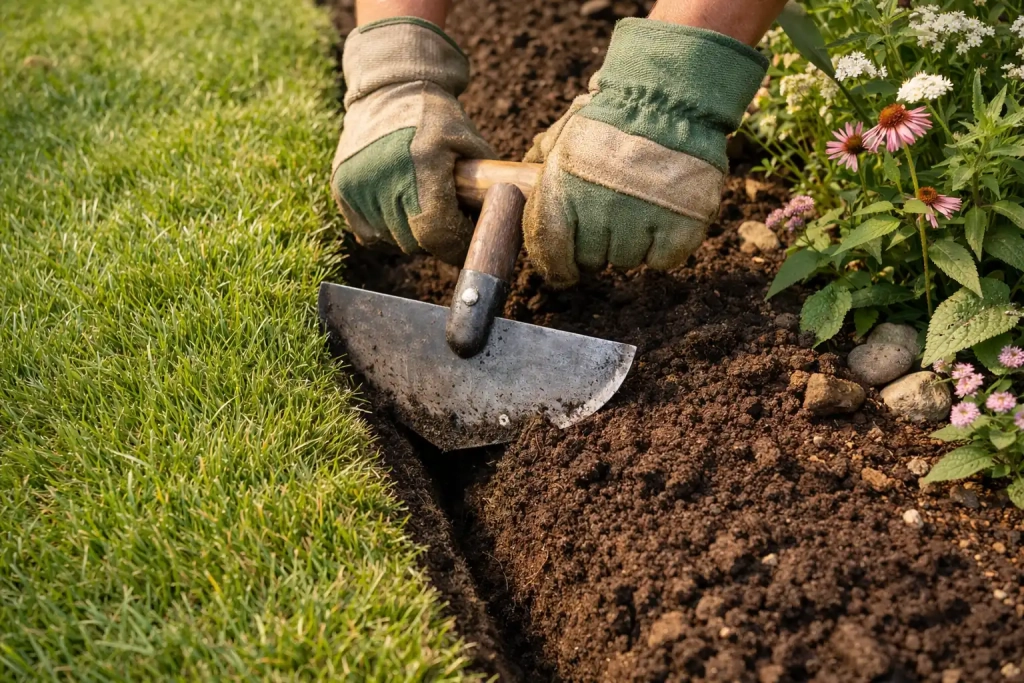
The oldest trick and still one of the best. Use a flat spade or half-moon edger to cut a V-shaped trench about 4–6 inches deep between your lawn and bed. Professional gardeners in England have relied on this technique for centuries. Some of the most photographed borders in the world use nothing else.
The catch? You’ll redo it once or twice a year. It’s labor, not money. But if you like changing bed shapes as plants mature, nothing gives you more flexibility.
Glass Bottle Borders
Push empty glass bottles neck-down into the soil to form a colorful recycled border. It costs nothing if you save bottles, and you can create patterns or stick with one color. This is decorative, not functional. It won’t stop aggressive grass runners.
Natural Log Edging
Got a tree you just took down? Cut the trunk and larger branches into sections and line your beds. The rustic look works in informal gardens. Expect 3–5 years before rot sets in, depending on wood species and local moisture levels.
What Are the Best Budget Garden Edging Materials?
Plastic Roll Edging
Cheap, widely available, and… fine. You dig a trench, sink the roll, and backfill. The problem shows up in freeze-thaw regions. That plastic heaves out of the ground every winter, and by spring you’re resetting it. In the Southeast or Pacific Northwest, it’ll behave better.
Pound-In Plastic Edging
Easier to install solo than the roll type. You hammer sections into the ground and move on. Same freeze-thaw issue applies, but you can tap pieces back each spring.
Metal Strip Edging
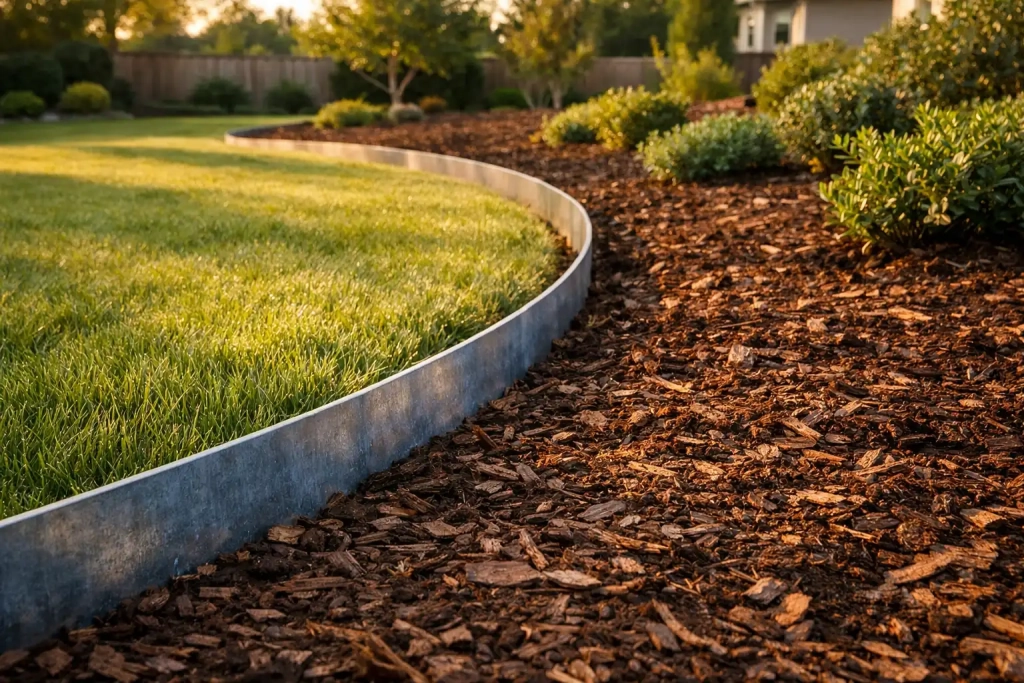
This is the budget option I actually recommend most often. Metal strips hammer into the ground, flex around curves, and last for years. Wear heavy gloves during install or the edges will slice your hands open. Steel develops a nice patina if you leave it uncoated. Aluminum stays cleaner.
Woven Willow (Wattle) Edging
Gorgeous in cottage and English gardens. Common across Europe but still underused here. It hammers in easily and gives instant character. The downside: one hit from a string trimmer, and you’re replacing a section.
Cedar Shingle Edging
Small cedar shingles are simple to pound around beds. Cedar resists rot naturally, giving you a few solid years. But shingles are fragile around mowers and trimmers.
Landscape Timbers
A solid DIY option if you own a saw. Pressure-treated timbers resist rot and last a decade or more. The trade-off is labor. You need to level the ground and cut sections to fit. Most people underestimate the prep work involved.
Bamboo Edging
The natural choice for Japanese-inspired gardens. Bamboo is nearly indestructible as an edging material, and it pounds in easily. But it looks out of place in cottage or formal designs. Match it to your style or skip it entirely.
Mid-Range Garden Edging Ideas Worth the Upgrade
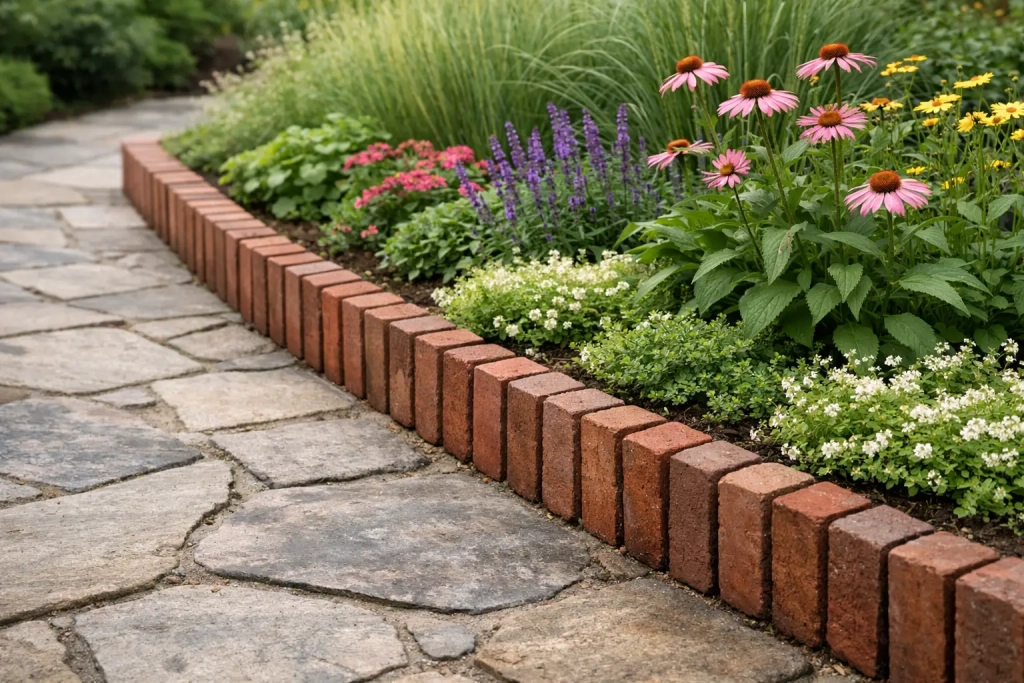
Brick Edging
Lay bricks flat in a shallow trench or stand them upright. The hardest part is getting them level and straight. Use a rubber mallet and a string line. Bricks pair well with patios and walkways, and they’ll last decades if the base is prepped right.
Scalloped Terracotta
Clean, classic, easy to install. Measure your entire perimeter before buying. Roughly 30% of DIY edging frustration comes from not purchasing enough material. Terracotta works best in mild climates. Hard freezes can crack it.
Eucalyptus Wood Borders
Pairs well with coastal and tropical gardens. Usually hammered in with a rubber mallet. Eucalyptus is naturally rot-resistant, giving you several good years at around $7 per linear foot.
Gravel Trench Edging
Dig a trench at least four inches deep, line it with weed barrier fabric, fill with gravel. Simple, drains well, creates clean separation. The weed barrier is the step people skip and then regret. Without it, you’ll fight weeds in the gravel inside of one season. The EPA’s updated procurement guidelines now recommend recovered-content weed barriers and edging products where available.
Recycled Rubber Edging
Made from recycled tires, secured with pegs. Nearly indestructible. The real advantage? Mowers can roll right up to it with no trimming needed. The EPA’s November 2025 guidelines recommend 30–100% recovered material content for garden edging, and recycled rubber products meet that standard.
Stone and Gravel Combo
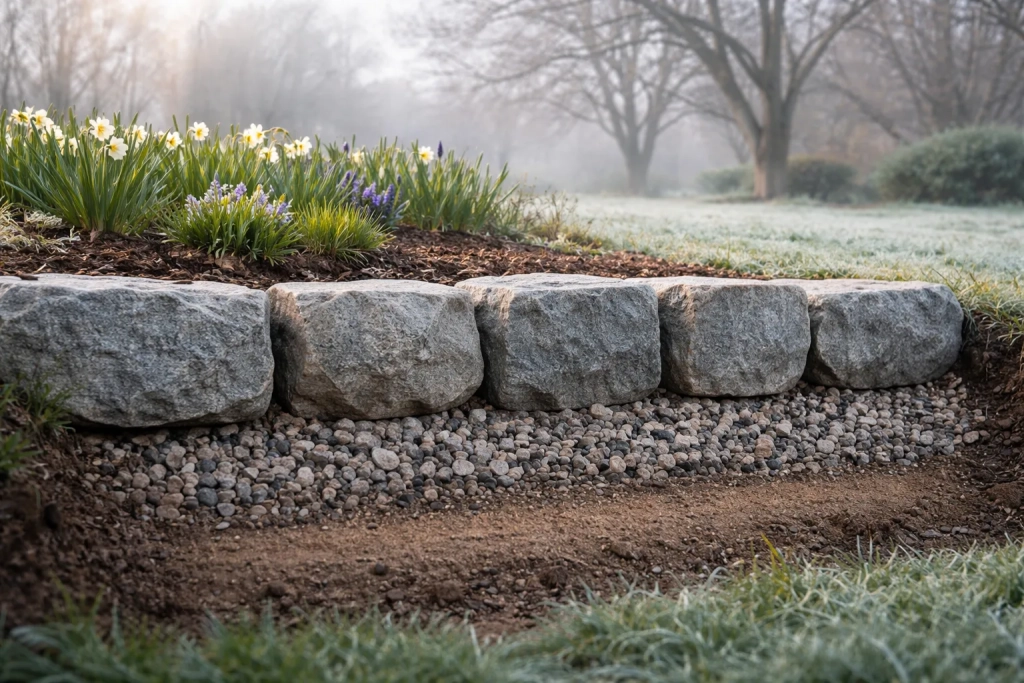
Same trench method as gravel, but topped with large stones for a more finished appearance. The weight of the stone locks everything in place. More labor, but it holds up for years without shifting.
Stone Pillar Edging
Interlocking stone pillars look fantastic but demand precise site prep. Each section has to be level, or the whole run looks off. For curved designs you’ll need individual pillars instead of interlocking sections, which triples install time. It’s one of those projects where working with a professional design team saves you from expensive do-overs.
How Do Living Borders Compare to Hard Edging?
Grass and Shrub Borders
Mixing ornamental grasses with flowering shrubs creates a soft, layered border that changes with the seasons. You’re trading maintenance certainty for visual interest. Living borders need pruning, shaping, and seasonal cleanup that hard edging simply doesn’t.
Mixed Planting Borders
Grow your favorite plants as an informal edge. Play with height, leaf color, and bloom timing. This looks the most natural but takes the most work to keep looking intentional.
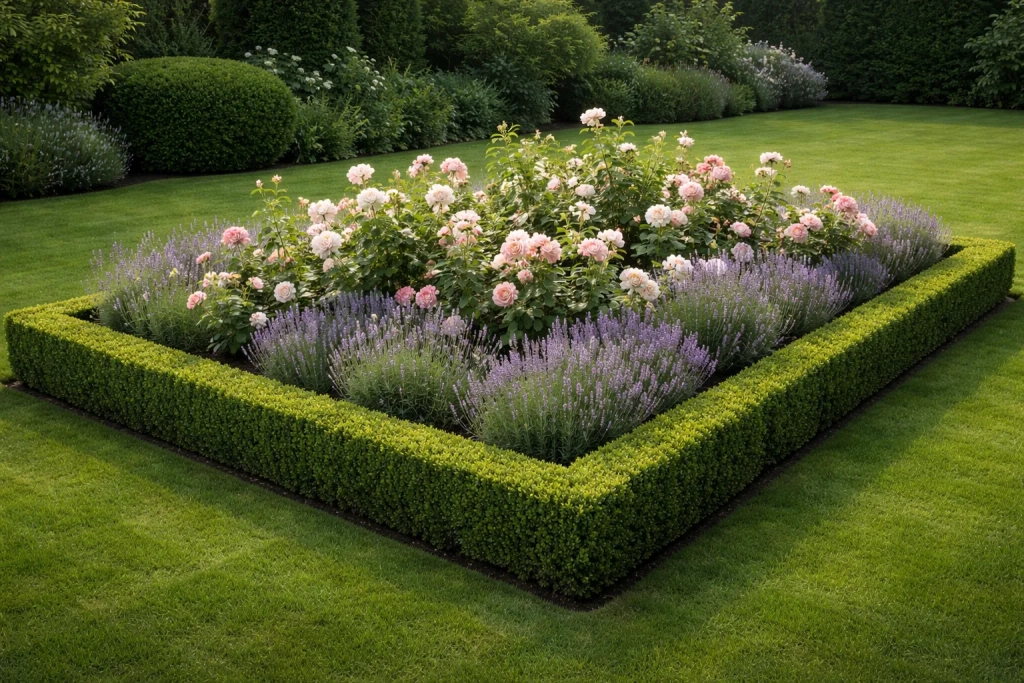
Boxwood Hedge Edging
The formal English garden look. Plant boxwood tight so they fill in quickly, then shear to shape. Boxwood is slow-growing, so it won’t escape on you. But it needs yearly pruning at minimum, and boxwood blight is a real concern in humid climates. If you’re considering this route, a fine gardening specialist can help you pick resistant cultivars for your region.
Which Garden Edging Survives Freeze-Thaw Cycles?
This is where most online guides completely fall short. They list materials without mentioning that half of them fail in cold climates.
Plastic edging (both roll and pound-in) heaves. It’s physics, not a manufacturing defect. Ground freezes, expands, pushes the plastic up. For anyone in USDA zones 3–6, plastic edging is a recurring chore, not a permanent fix.
Stone and metal are your best bets in cold regions. Stone stays put because it’s heavy enough to resist frost heave. Metal strips flex with the ground rather than popping out.
Wood and bamboo fall in the middle. They don’t heave, but moisture from freeze-thaw accelerates rot. Cedar and pressure-treated lumber handle this better than untreated pine, which might last two seasons before going soft.
Actually, the material matters less than the prep underneath it. A six-inch gravel base under stone edging prevents the vast majority of frost-related shifting. Skip the base, and even premium stone will wander. That’s a lesson you don’t want to learn after spending a weekend on installation. Avoiding common landscaping mistakes like skipping base prep will save you real money and frustration.
Garden Edging Material Comparison at a Glance
| Material | Expected Lifespan | Install Difficulty | Best Climate | Freeze-Thaw Rating |
| Hand-cut trench | Refresh 1–2x/year | Easy | All | N/A |
| Plastic (roll) | 3–5 years | Easy | Mild/warm | Poor |
| Plastic (pound-in) | 3–5 years | Easy | Mild/warm | Poor |
| Metal strips | 10–15+ years | Moderate | All | Good |
| Cedar/wood | 3–7 years | Moderate | Mild | Fair |
| Bamboo | 8–12 years | Easy | All | Good |
| Brick | 20+ years | Moderate | Mild/warm | Fair |
| Stone | 20+ years | Hard | All | Excellent |
| Recycled rubber | 15+ years | Easy | All | Good |
| Boxwood hedge | Ongoing | Moderate | Mild/humid risk | Fair |
The right garden edging ideas come down to climate first, style second. If you’re in a region with hard winters, stone and metal will save you from rebuilding borders every spring. If you’re in a mild zone, you’ve got more freedom with wood, terracotta, or living borders. And if your budget is tight, a simple hand-cut trench costs nothing and looks better than most people expect. Pick the material that fits your conditions, prep the base properly, and your beds will look intentional for years. If the project feels bigger than a weekend job, partnering with an experienced team who understands your local soil and climate can make the difference between edging that lasts and edging you redo next April.
Frequently Asked Questions
What is the longest-lasting garden edging material?
Natural stone and metal strip edging last the longest. Stone borders can hold up for 20+ years with minimal maintenance when installed over a proper gravel base. Metal strips (steel or aluminum) typically last 10–15 years and flex with ground movement rather than cracking or heaving.
How do I keep garden edging from shifting in cold climates?
Lay a 4–6 inch gravel base beneath your edging before installing it. This allows water to drain instead of freezing around the material and pushing it out of position. Stone and metal resist freeze-thaw shifting better than plastic or wood. Avoid thin plastic roll edging in USDA zones 3–6 entirely.
What garden edging ideas work best on a tight budget?
Hand-cut edging costs nothing but time and creates a clean, professional border. A flat spade or half-moon edger is all you need. For a step up, metal strip edging offers excellent durability at a budget-friendly price and can be hammered in without digging a trench.
Does garden edging actually reduce yard maintenance?
Yes. Properties with defined edging borders cut 15–20 minutes per mow session because there’s no hand-trimming along bed margins. Edging also holds mulch in place after storms and prevents grass stolons from invading beds, which means less weeding throughout the growing season.
Is recycled rubber edging safe for garden beds?
The EPA’s November 2025 updated procurement guidelines recommend 30–100% recovered material content for garden edging products. Recycled rubber edging meets these standards and is considered low-risk. It’s nearly indestructible, and mowers can roll right up to it without trimming. Some gardeners prefer to keep it away from vegetable beds as a precaution.
How often does hand-cut edging need to be redone?
Plan on refreshing a hand-cut trench edge once or twice per growing season. Spring is the best time to re-cut, and the job takes about an hour per 50 linear feet with a half-moon edger. It’s more work than permanent materials but gives you the most flexibility to reshape beds as plants grow.
What is the most common mistake people make with garden edging?
Skipping base preparation. Installing edging directly on compacted clay or loose topsoil leads to shifting, sinking, and frost heave. A gravel base of 4–6 inches prevents the majority of these failures. The second most common mistake is buying too little material. Measure your full perimeter and add 10% before purchasing.