

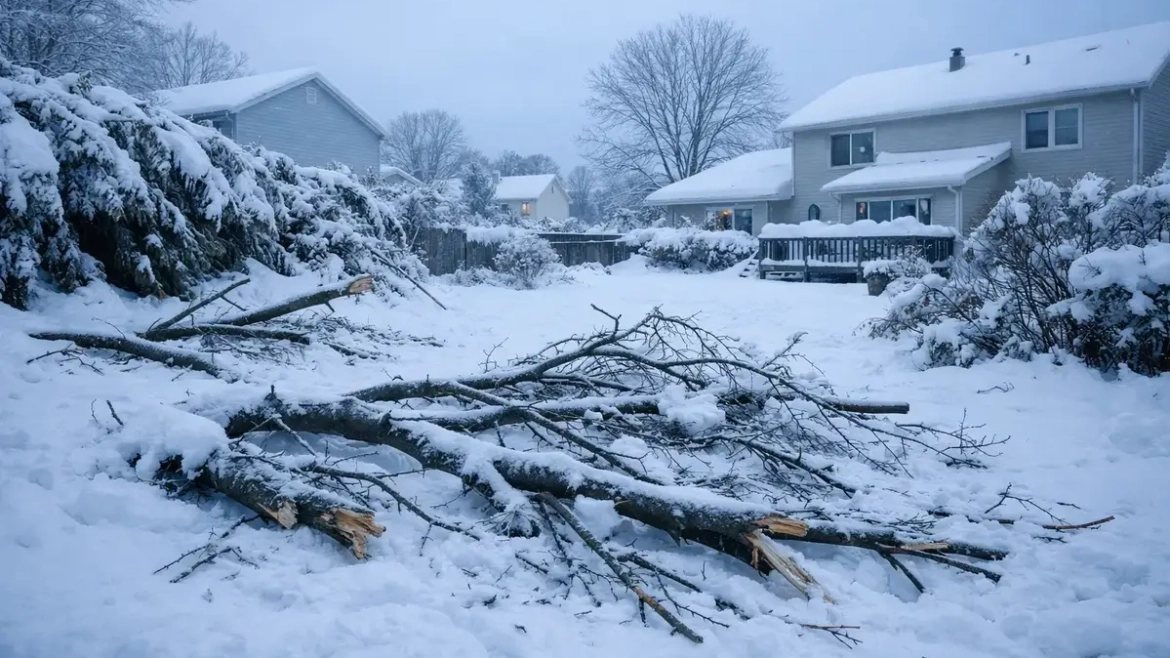
Post-storm landscape recovery after a blizzard isn’t about rushing outside with a chainsaw the second the snow stops. It’s about knowing what to check, what to leave alone, and where most homeowners waste money by acting too fast. A blizzard can snap branches under ice weight, uproot shallow-rooted trees, compact soil, and bury plants under feet of heavy, wet snow. The good news? Most of your yard is probably more salvageable than it looks right now.
Post-storm landscape recovery is the process of assessing, cleaning, pruning, and restoring your yard after severe weather. For blizzards specifically, that means checking for snow load damage on branches, identifying frost-heaved roots, clearing debris safely, and giving stressed plants the support they need to bounce back by spring. According to Harvard’s Joint Center for Housing Studies, American homeowners spent roughly $24 billion on disaster-related repairs in 2023 alone. A big share of that goes toward landscape work that could have been handled smarter with a plan.
This article covers blizzard-specific recovery from first assessment to spring follow-up. It won’t cover tropical storm salt damage or fire recovery in detail (those are different animals). What it will do is walk you through the exact sequence that keeps costs down and plants alive.
What Should You Do First After a Blizzard Hits Your Yard?
Start with safety, not cleanup. That’s the part most people skip because they’re staring at a fallen branch on their car and can’t think straight.
If you see downed power lines anywhere near your property, stop. Don’t go outside. Call your utility company. Every year people get electrocuted touching debris that’s in contact with a live wire buried under snow. It looks harmless. It isn’t.
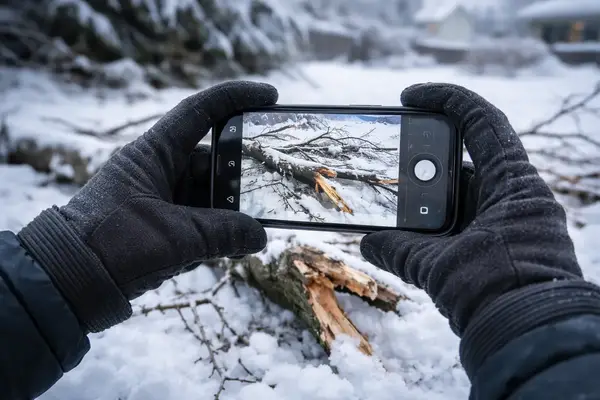
Once you’ve confirmed the area is safe, grab your phone and document everything before you touch it. Photos and video from multiple angles. Your insurance company will want this, and claims without documentation get denied at a much higher rate. Walk the full perimeter of your property. Look up into tree canopies for hanging limbs (arborists call these “widow-makers” for a reason). Check fence lines, garden beds, and any structures like pergolas or sheds that may have shifted under snow load.
Wear thick gloves and boots with traction. Blizzard debris hides under snow, and you won’t see the broken glass or jagged branch until you’ve already grabbed it.
How Do You Assess Blizzard Damage to Trees and Shrubs?
This is where the real decisions happen, and where I’ve seen homeowners throw away thousands of dollars by guessing wrong.
Heavy, wet snow and ice are the primary killers in a blizzard. Unlike wind damage from hurricanes (which rips and twists), snow load damage pushes straight down. Branches crack at their junction points. Multi-stem trees split apart at the crotch. Evergreens, especially arborvitae and upright junipers, get splayed open like a bad haircut. Deciduous trees with existing weak “V” crotches are the most vulnerable, and UF/IFAS Extension research confirms those weak branch unions fail at significantly higher rates during any heavy loading event.
Here’s what to look for on every tree and large shrub on your property:
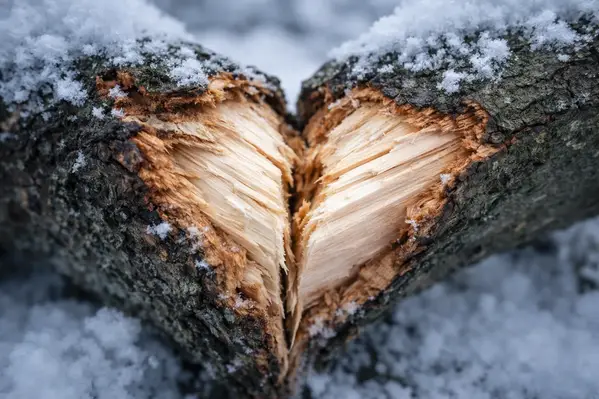
1. Cracked or split branch unions. If you can see exposed white wood at a crotch, that branch is compromised.
2. Leaning trunks. A tree that was vertical last week and now leans 15 degrees may have root damage underneath. Check the soil at the base for heaving or cracking.
3. Bent-over evergreens. Arborvitae and columnar junipers often splay under snow. If stems aren’t cracked, you can tie them back. If bark is stripped or the cambium layer is exposed, those stems won’t recover.
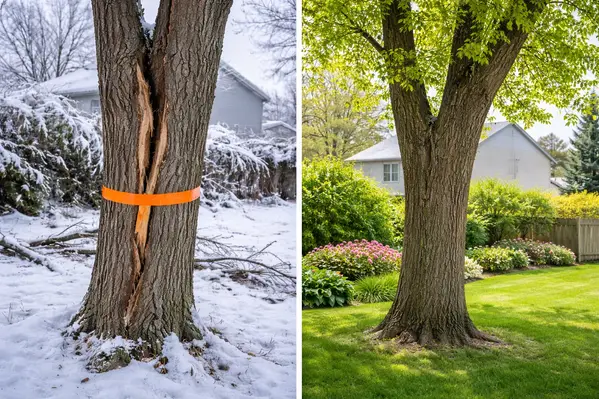
4. Bark damage (girdling). When more than half the trunk circumference has damaged or missing bark, the tree can’t move water and nutrients. That’s typically a removal situation.
5. Hanging or dangling limbs. Anything overhead that’s cracked but hasn’t fallen yet is a safety hazard. Don’t stand under it. Call a pro.
Most homeowners can handle the visual inspection. But I’d push back on the idea that you should make removal decisions yourself. An ISA-certified arborist with a TRAQ (Tree Risk Assessment Qualification) credential is the gold standard here. The International Society of Arboriculture has a free search tool to find one near you. A 30-minute assessment runs $75–$200 and can save you from removing a $3,000 tree that was actually recoverable.
When and How to Prune Storm-Damaged Plants
Pruning after a blizzard is about triage, not aesthetics. You’re not shaping anything. You’re removing what’s broken and creating clean cuts so the plant can seal over the wound before disease gets in.
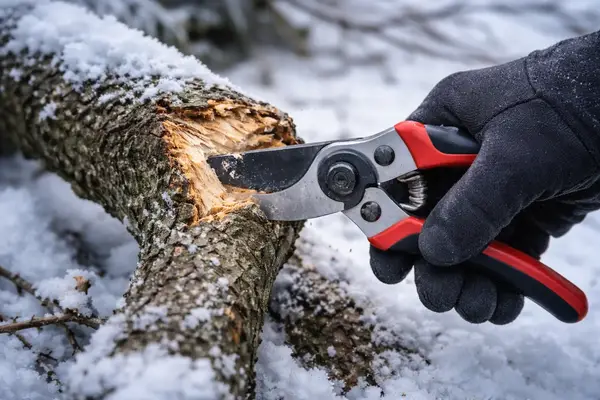
Trim every broken branch back to just above a healthy bud or lateral branch. Don’t leave stubs. A stub can’t heal over and becomes a highway for fungi and boring insects. Use sharp, sanitized pruners or a handsaw, and re-sanitize between cuts (a quick wipe with rubbing alcohol works).
Skip the pruning sealant. I know it feels like you’re protecting the tree, but research consistently shows wound dressings trap moisture, promote decay, and slow the tree’s natural compartmentalization process. Just make a clean cut and let the tree handle the rest.
Here’s the contrarian take most articles won’t give you: don’t prune everything that looks ugly. If a branch is cracked but still has live buds and intact bark connecting it to the trunk, leave it through spring. I’ve watched dozens of “hopeless” branches leaf out and recover when given time. You can always remove it later. You can’t reattach it.
One important exception. If pruning means removing flower buds (on ornamental trees, fruit trees, or spring-blooming shrubs), accept it. Losing next year’s flowers hurts less than losing the whole plant to infection.
Which Trees and Shrubs Won’t Recover After a Blizzard?
Not everything is worth saving, and recognizing that early keeps you from pouring water and fertilizer into a lost cause.
Trees with more than 50% of their canopy destroyed or stripped will struggle to produce enough energy to sustain themselves. That’s the rough threshold. Below 50% damage, most healthy trees recover over 1–3 growing seasons. Above it, you’re on borrowed time.
Splits down the main trunk are almost always fatal. If the trunk has cracked vertically and the split extends below the first major branch union, removal is the safest call. Cabling can sometimes save a tree with a partial split, but that’s an arborist decision, not a DIY one.
For shrubs, check the crown (the base where all the stems emerge from the soil). If that’s crushed, snapped at ground level, or pulled out of the ground with most roots severed, the plant is done. The exception is suckering shrubs and own-root roses, which can regenerate from root tissue even when the top growth is destroyed.
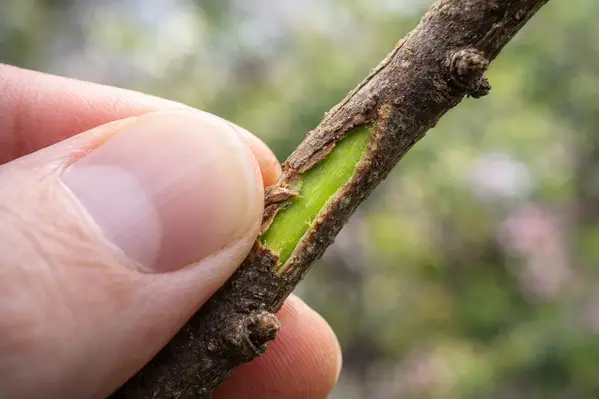
Before you pull anything out, try the scratch test. Use your thumbnail to scratch a small section of bark on a stem. If you see green underneath, it’s alive. Brown or dry? That stem is dead. Test multiple stems on multi-branched shrubs before writing off the whole plant.
Should You Remove Damaged Leaves After a Storm?
No. And this is the mistake I see more than any other.
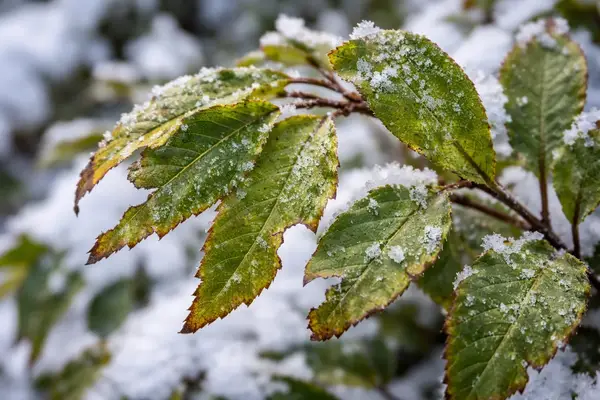
Tattered, torn, or half-frozen leaves look terrible. Every instinct tells you to rip them off and tidy up. But those ugly leaves are still photosynthesizing. They’re still producing the sugars your plant needs to heal wounds, push new growth, and build energy reserves for winter dormancy. Removing them forces the plant to spend energy it doesn’t have on replacing foliage instead of repairing damage.
Leave damaged foliage in place on trees and large shrubs. For perennials and smaller shrubs that regrow quickly (like roses on their own roots or thicket-forming species), it’s fine to trim back tattered growth and let new leaves replace it.
How to Support and Stabilize Plants After Blizzard Damage
Blizzards don’t just break things above ground. Heavy snow compacts soil. Freeze-thaw cycles heave roots out of the ground. Meltwater erosion washes away the top few inches of soil and mulch that were protecting root zones.
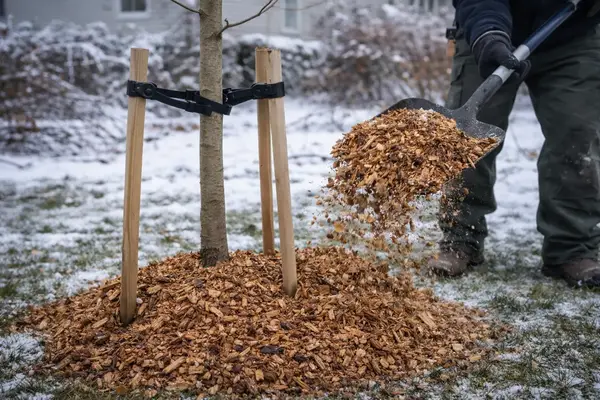
Start by re-covering any exposed roots with fresh topsoil. Roots exposed to air and freezing temperatures die fast. Then top-dress your beds with 3–4 inches of mulch. Mulch is doing triple duty here: insulating roots, holding soil moisture, and preventing mud from splashing soil-borne pathogens onto damaged stems.
Stake any trees or large shrubs that are leaning but not broken. Use wide, flexible ties (not wire) and two or three stakes. Remove them after one growing season. Trees that stay staked too long don’t develop trunk strength.
Young trees that got partially pulled from the ground by heavy snow can usually be replanted if their root ball is mostly intact. Push the tree back upright, firm the soil around the base, water deeply, and stake. For larger trees, call a professional landscape team to handle the repositioning safely. A 4-inch caliper tree weighs hundreds of pounds and can crush you if it shifts during replanting.
Don’t skip watering just because it’s cold. Damaged plants going into winter dormancy while dehydrated are far more likely to die. Water deeply once a week until the ground freezes solid, even if it feels counterintuitive.
Should You Fertilize After Storm Damage?
Probably not, and definitely not right away.
Fertilizer forces growth. A stressed, damaged plant that’s forced to push new shoots is burning energy it should be spending on wound repair and root recovery. I’ve seen well-meaning homeowners kill shrubs by dumping granular fertilizer around the base a week after storm damage. The plant pushed a flush of soft new growth, couldn’t sustain it, and collapsed.
If your plant hasn’t been fertilized at all this season and it’s still early enough in the growing year for new growth to harden off before winter, a very diluted liquid fertilizer (half-strength or less) is acceptable. But compost is almost always the better call. A 1–2 inch layer of quality compost feeds slowly, improves soil structure, and doesn’t risk the shock that synthetic fertilizers can cause.
Wait until the following spring for any serious feeding. By then, you’ll know which plants survived and which need replacing.
How Much Does Post-Storm Landscape Recovery Cost in 2026?
This is the question everyone asks and nobody gives a straight answer to. Here’s what the numbers actually look like.
According to Angi’s 2026 cost data, landscape and yard storm repairs (including tree removal, fence and deck repair, and replanting) range from $500 to $7,500 nationally. Tree removal is the single biggest cost driver, and emergency rates right after a storm can run 2–3 times normal pricing.
Post-Storm Tree Removal Costs by Region (2026)
| Region | Example State | Cost Per Tree |
| Northeast | New York | $750–$1,100 |
| Southeast | Florida | $750–$1,500 |
| Midwest | Illinois | $535–$730 |
| West | California | $650–$1,300 |
| Southwest | Texas | $300–$850 |
Source: Angi, updated March 2026.
Recovery Budget Tiers (Typical Small to Mid-Size Yard)
| Tier | What’s Included | Estimated Cost |
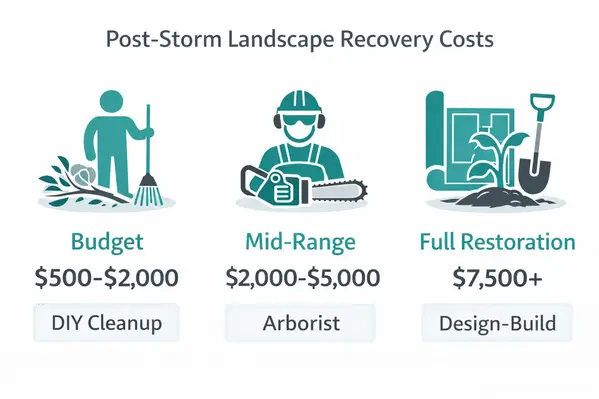
| Budget | DIY debris cleanup, reseeding, basic sod | $500–$2,000 |
| Mid-Range | Certified arborist assessment, professional removal, basic replanting | $2,000–$5,000 |
| Full Restoration | Design-build resilient landscape with native plants, permeable hardscape, irrigation | $7,500+ |
One thing worth knowing: emergency tree removal quotes that come in right after a blizzard are routinely inflated. If the tree isn’t sitting on your house or blocking your driveway, wait 7–10 days. Prices drop fast once the immediate rush clears. I’ve seen quotes drop by 40–50% within two weeks of a major storm.
Can You Handle Storm Cleanup Yourself, or Do You Need a Pro?
Depends on what you’re dealing with.
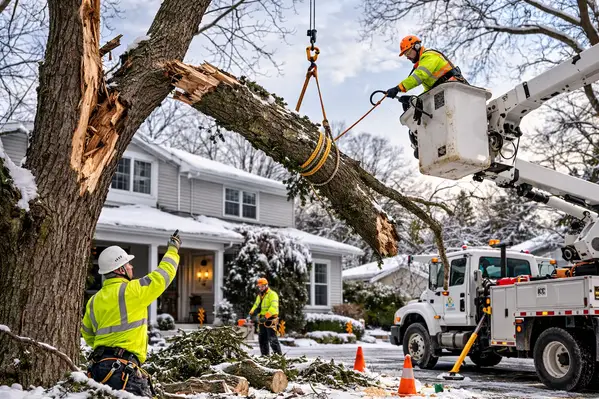
Small branches, scattered debris, raking out garden beds, re-staking perennials: all DIY-safe. Anything involving a chainsaw, a ladder, or a tree that weighs more than you do: call someone. This isn’t about skill. It’s about physics. The landscaping industry employs roughly 1.7 million workers nationally, and even experienced crews get hurt on storm cleanup jobs. A homeowner with a rental chainsaw and a YouTube tutorial is a trip to the emergency room waiting to happen.
DIY vs. Professional Storm Recovery
| Factor | DIY | Professional |
| Cost | Near $0 (labor only) | $500–$7,500+ |
| Timeline | Days to weeks | Same-day emergency or 1–3 days |
| Safety Risk | High for anything beyond small debris | Insured, trained crews |
| Insurance Claims | Often requires licensed pro documentation | Work supports claims process |
| Plant Health Outcome | Risk of improper cuts causing disease | Correct pruning preserves recovery potential |
A point most articles skip: your homeowner’s insurance may only cover tree removal if the tree damaged a covered structure (your house, fence, or shed). A tree that fell in your yard and didn’t hit anything? Probably not covered. And flood damage from meltwater is almost never covered under a standard homeowner’s policy. Check your policy before you assume someone else is paying.
How to Stormproof Your Yard Before the Next Blizzard
Recovery is reactive. Prevention is where the real value sits.
The ASLA’s 2040 Climate Action Plan now calls for designing residential and commercial landscapes with increased storm events as a baseline assumption, not an edge case. That’s a significant shift from how the industry operated even five years ago.
Here’s what actually works:
Choose storm-resistant species. Native plants adapted to your regional climate handle extreme weather better than ornamental imports. Wind-tolerant species (like live oaks and sabal palms in the Southeast, or sugar maples and white oaks in the Northeast) have root systems and branch structures built for heavy loading. Ask your local nursery or landscape designer about the best options for your area.
Prune proactively. Structural pruning done in late fall removes weak crotches, crossing branches, and dead wood before winter storms test them. This is the single highest-ROI investment for storm prevention. And never “top” your trees. Topping creates weak stub growth that’s far more likely to break in the next storm. ISA and UF/IFAS both call it extremely harmful.
Mulch deep. A 3–4 inch mulch layer insulates roots from freeze-thaw cycles, holds soil in place during melt, and reduces compaction from heavy snow. Refresh it every fall.
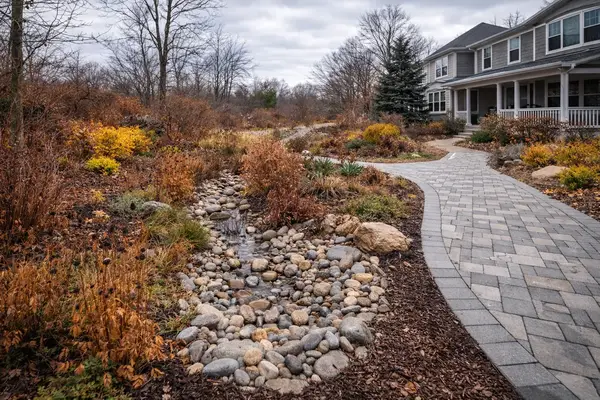
Fix drainage before you need it. Rain gardens, swales, and permeable paving redirect meltwater away from root zones and foundations. Permeable pavers run $12–$25 per square foot (compared to $6–12 for traditional concrete), but they’re a long-term play that reduces flooding risk and may keep you compliant with local stormwater rules.
Stake young trees early. Anything planted in the last 1–2 years with a trunk caliper under 3 inches should be staked through its first winter. Secure loose container plants and garden structures before storms arrive.
What to Do Next Spring After a Blizzard
The real verdict on blizzard damage doesn’t come for months. Some plants that look dead in January will push new growth in April. Others that seemed fine will fail to leaf out because root damage you couldn’t see finally caught up.
Keep notes on what was damaged and where. Water through early spring if conditions are dry. Apply a light layer of compost (skip the heavy fertilizer until you’re sure what survived). Scratch-test any deciduous plant that hasn’t broken dormancy by mid-spring. If the stems are brown and dry all the way through, it’s time to remove and replace.
Watch for signs of disease or insect activity on previously damaged plants. Borers love stressed trees. Fungal infections love pruning wounds that didn’t seal properly. Catching these early is the difference between a spray treatment and a full removal.
Post-storm landscape recovery after a blizzard isn’t glamorous work. But the homeowners who follow a methodical process (assess, prune correctly, support, and wait) save thousands of dollars and keep their yards intact. The ones who panic-prune, over-fertilize, and hire the first crew that shows up with a chainsaw? They end up replacing plants that were perfectly recoverable. Take the slower path. Your garden will reward you for it.
FAQs
Does homeowners insurance cover post-storm landscape recovery?
Usually only if a tree or branch damaged a covered structure like your house, fence, or shed. A tree that fell in your yard without hitting anything is typically not covered. Debris cleanup is often excluded or capped at a low dollar amount. Flood damage from snowmelt is almost never covered under a standard policy. Check your specific coverage before assuming you’re reimbursed.
How soon after a blizzard should I start cleaning up my yard?
Wait until conditions are safe and the storm has fully passed. For emergency hazards (tree on your house, blocked driveway), call a professional immediately. For non-emergency cleanup, waiting 7–10 days can save you 40–50% on tree removal costs because emergency pricing drops once the initial rush clears. Angi’s 2026 data puts landscape storm repairs between $500 and $7,500, with emergency rates running 2–3 times higher.
Should I hire any tree company or only a certified arborist for post-storm landscape recovery?
An ISA-certified arborist with a TRAQ (Tree Risk Assessment Qualification) credential is the standard you should require. Non-certified crews frequently push full removal of trees that could be saved, costing you thousands in unnecessary work. UF/IFAS Extension specifically recommends TRAQ-qualified professionals for post-storm assessments. You can search for one free at treesaregood.org.
Can a tree that’s leaning after a blizzard be saved?
Often, yes. If the root ball is mostly intact and the trunk isn’t cracked, a leaning tree can be staked back upright and will re-establish over the next growing season. Trees with partial root damage may benefit from cabling or bracing. The decision should come from a qualified arborist, not a general contractor.
Is it safe to fertilize plants right after storm damage?
No. Fertilizer forces new growth at a time when the plant should be directing energy toward wound repair. Applying fertilizer to a stressed plant can kill it. Wait until the following spring, then start with a light layer of compost rather than synthetic fertilizer. If you must feed during the current season, use a half-strength liquid solution and only if the plant hasn’t been fertilized recently.
What does post-storm landscape recovery cost on average?
According to Angi’s 2026 national data, landscape storm repairs range from $500 to $7,500. Tree removal is the biggest expense, running $535–$1,500 per tree depending on your region. A basic DIY cleanup with reseeding costs $500–$2,000, while a full design-build restoration with native plants and drainage improvements can exceed $7,500.
How do I know if my tree is dead or just dormant after a blizzard?
Use the scratch test. Scrape a small section of bark with your thumbnail. Green tissue underneath means the stem is alive. Brown or dry tissue means it’s dead. Test multiple stems on multi-branched plants before making a removal decision. Deciduous trees may not show signs of life until mid-spring, so don’t rush the call.