
Creating Four-Season Interest In Coastal Gardens
A four-season coastal garden is a landscape designed to deliver color, structure, and visual interest during every month of the year, even when salt spray, wind, and sandy soil are working against you. It combines evergreen anchors, seasonal perennials, and hardscaping to keep your yard alive and engaging from January through December.
Most coastal homeowners get this wrong. They load up on spring and summer flowers, and by November, the yard looks abandoned. I've walked properties in Rhode Island where $8,000 in plantings turned to brown sticks by the second winter because nobody planned beyond the bloom season. A 2025 NALP report found that the U.S. landscaping industry hit $188.8 billion, growing 4.8% year over year. People are spending more on their yards. But spending more doesn't mean spending smarter, and coastal gardens demand a different playbook than inland ones.
This article covers the five design steps that actually work for coastal four-season gardens, plus a season-by-season plant guide built around salt tolerance and wind exposure. It won't cover edible gardens, container gardening, or tropical landscapes. Those are different animals.
Steps to a Year-Round Coastal Garden Design
Here's a contrarian take most garden blogs won't give you: plants are the least important part of a four-season garden. Structure is everything.
During spring and summer, blooms hide a garden's weaknesses. Everything looks good when hydrangeas are popping. But strip away the flowers and what's left? If your answer is "bare dirt and some sticks," your garden has no bones.
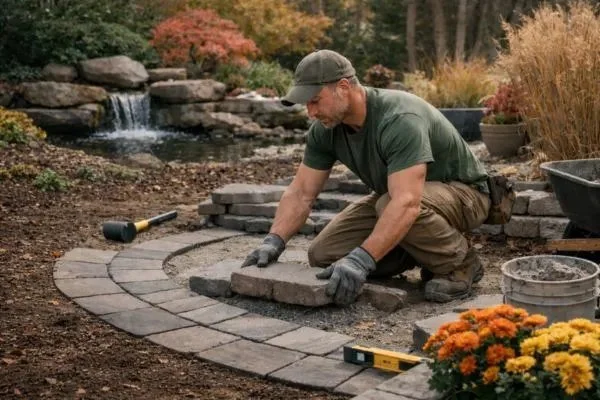
Walk outside in February and look at your yard. If it feels flat and lifeless, you're missing structure. Paths, stone walls, a well-placed boulder, the silhouette of a Japanese maple against a gray sky. These are the things that carry a garden through the quiet months. A yard with strong design principles holds up in every season because the layout does the heavy lifting, not the blooms.
Building an Evergreen Framework
Evergreens are the backbone of any four-season coastal garden. They give you color when everything else goes dormant, and they create the "stage" that makes your seasonal plants pop.
But here's where coastal gardeners get burned. Not all evergreens handle salt spray. A boxwood that does fine in a sheltered Providence backyard will scorch and die in an exposed Narragansett front yard. The University of Florida's coastal plant research confirms that "salt-tolerant" labels on nursery tags don't always hold up in direct spray zones. Survival rates drop fast when plants sit within a few hundred feet of open water.
What actually works in exposed coastal sites: inkberry holly, Eastern red cedar, bayberry, and shore juniper. For more protected spots, 'Sky Pencil' holly adds a vertical punch, and balsam fir brings soft texture. Mix shapes. A tall columnar evergreen next to a low mounding one creates contrast that reads as intentional, not random.
Plan for roughly 40–60% evergreen coverage in your beds. That ratio keeps the garden visually full in winter without feeling like a wall of green in summer.
How Do You Layer Trees, Shrubs, and Perennials?
Layering is where professional landscape design separates from weekend DIY. The idea is simple: tall in back, short in front, mid-height in between. The execution is where people stumble.
Start with your evergreen trees and shrubs as the permanent layer. Then add deciduous shrubs that bloom at different times (spring-blooming quince, summer hydrangeas, fall-color ninebark). Fill in with perennials that peak in each season. Finish with a few annuals for extra color where you need it.
The mistake I see constantly: buying everything that blooms in June. Your garden explodes for three weeks, then nothing. Instead, map bloom times on a calendar before you buy a single plant. If you can't find something blooming or showing interesting foliage every month, you have a gap. Coastal conditions make this harder because your plant palette is smaller, so each pick matters more.
Hardscaping That Works in Every Season
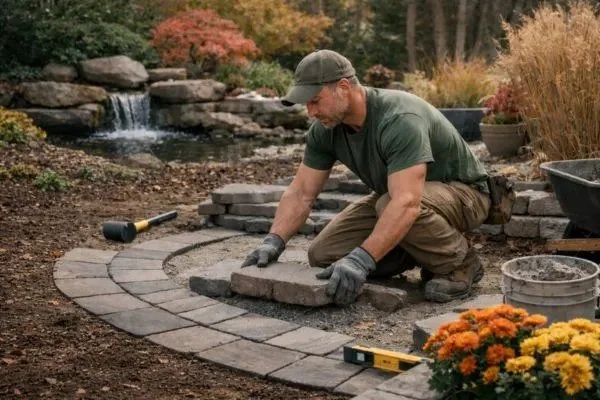
Hardscaping refers to the non-living elements: paths, patios, walls, arbors, fountains, and boulders. On the coast, these aren't just decorative. They're functional windbreaks and erosion controls.
A stone wall on the windward side of a garden bed can drop wind speed by 50% or more, creating a sheltered microclimate where less-hardy plants survive. That's not a theory. It's physics, and it's the difference between replacing $3,000 in dead plants every spring and watching them come back year after year. According to recent cost estimates, full yard landscaping averages $3,647 nationally, but coastal sites often run 20–30% higher because of soil amendment and wind protection needs.
Don't overlook water features. A simple fountain adds sound and movement even in winter. And path materials like bluestone or brick change color when wet, adding an unexpected layer of visual interest on rainy days. These functional outdoor elements hold the garden together when everything else is dormant.
What's the Best Color Strategy for Year-Round Interest?
Color planning for a coastal garden means thinking beyond flowers. Bark, berries, foliage, and seed heads all contribute, and on the coast, they have to.
Start with spring's soft blues and whites (think native irises and serviceberry blossoms). Transition to summer's bold yellows and purples with coneflowers and phlox. Fall brings the heavy hitters: Japanese maple reds, ornamental grass golds, and the deep maroon of native sumac.
Winter is when most people give up. Don't. Winterberry holly produces bright red berries that last for months and feed birds. Paperbark maple's cinnamon-colored bark peels in thick curls. Red twig dogwood lights up against snow. These aren't consolation prizes. In a well-designed four-season coastal garden, winter can be the most striking season of all.
The NC Sea Grant's 2025 coastal living guide recommends focusing on native species that provide multi-season interest, like sand live oak, which offers spring flowers, summer shade, and year-round evergreen structure.
What Should You Plant in Each Season?
Here's a practical guide. Every plant listed below tolerates at least moderate coastal exposure. If you're in a direct spray zone (within 200 feet of open water), stick to the starred (*) picks.
Spring
Early-blooming bulbs kick things off. Snowdrops* and daffodils* are both salt-tolerant and reliable. Pair them with native redbud for canopy-level color and shore-friendly heather (Erica) that blooms from January through March in milder coastal zones. Bleeding heart and Lenten rose (Helleborus)* fill the understory with texture.
Summer
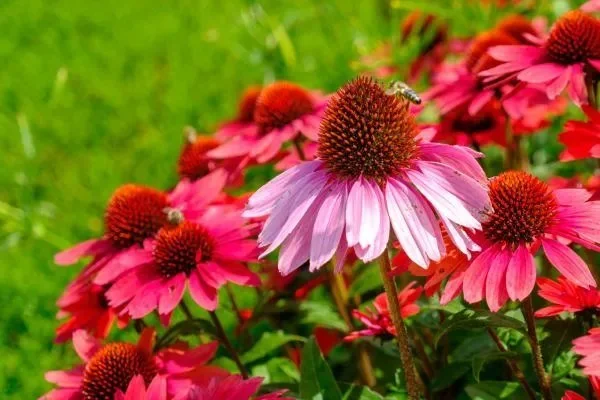
This is the easy season. Coneflower*, black-eyed Susan*, and phlox handle coastal conditions well. For shrubs, hydrangeas perform in sheltered spots, while sweetshrub (Calycanthus) adds fragrance. Layer in ornamental grasses like switchgrass* and blue oat grass* for movement and texture that a good gardening program can maintain through fall.
Fall
Don't just rely on foliage. Asters*, goldenrod*, and sedum extend the bloom color deep into October. Japanese maples and ninebark deliver fall leaf color, while ornamental grasses hit their stride with golden plumes and seed heads that catch afternoon light.
Winter
This is where your planning pays off. Red twig dogwood* and winterberry holly* are coastal staples for a reason: color that lasts months with zero maintenance. Paperbark maple and river birch add bark interest. Leave coneflower and sedum seed heads standing through winter. They look sculptural against snow, and finches will thank you.
If your garden still feels empty in January, it's a sign your evergreen framework needs reinforcing. That's the foundation everything else builds on, and restoring that structure is the single highest-impact change you can make.
The bottom line: a four-season coastal garden isn't about cramming in more plants. It's about choosing fewer, tougher plants and arranging them so something is always happening. That takes planning. But once it's in place, you get a yard that works for you 365 days a year, not just from May to September. And if you're working with a team that understands your market, the strategy behind your garden content works the same way.
FAQs
What is a four-season coastal garden?
A four-season coastal garden is a landscape designed to look good in every month of the year while tolerating salt spray, wind, and sandy soil. It relies on evergreen structure, seasonal perennials, and hardscaping to maintain year-round color and interest. The approach requires salt-tolerant plant selection that most inland garden guides don't account for.
How much does it cost to install a four-season coastal garden?
National averages for full yard landscaping sit around $3,647, according to 2025 data from Angi and Fixr. Coastal sites typically run 20–30% higher because of soil amendments and wind protection. Budget projects start around $3,000–$8,000, while high-end designs with hardscaping and irrigation can exceed $20,000.
What are the best salt-tolerant plants for year-round interest?
Inkberry holly, Eastern red cedar, bayberry, and shore juniper handle direct salt exposure and provide evergreen structure. For seasonal color, winterberry holly (winter berries), coneflower (summer blooms, winter seed heads), and red twig dogwood (winter stem color) are reliable performers in coastal zones 6–8.
Why do coastal garden plants die after the first year?
The most common reason is skipping soil testing for salt buildup. Sandy coastal soils drain too fast, and salt accumulates in the root zone. Installers report that "salt-tolerant" plant labels frequently overstate performance in exposed sites. Full replanting after a first-year die-off costs $3,000–$10,000 for a typical yard.
Do I need an evergreen framework for a four-season garden?
Yes. Evergreens are what keep the garden from looking empty from November through March. Plan for 40–60% evergreen coverage in your beds. Without that foundation, your garden depends entirely on flowers, which means it only works for about five months of the year.
How do I protect coastal garden plants from wind damage?
Stone walls, berms, and dense evergreen hedges on the windward side reduce wind speed dramatically. Creating sheltered microclimates lets you grow plants that wouldn't survive in full exposure. This is more effective and longer-lasting than staking or wrapping individual plants.
What questions should I ask a landscape designer about coastal conditions?
Ask about wind patterns across your property through all four seasons, salt-spray zones, soil salt accumulation testing after installation, and the 3–5 year replacement rate for the specific plants they're proposing at your exact exposure level. Most homeowners never ask these questions, and most designers don't volunteer the answers.
