
Spring Garden Cleanup Vs Restoration — What Your Property Actually Needs
Spring garden cleanup is the single most cost-effective thing you can do for your yard each year. A basic spring cleanup runs $100–$300 nationally (Angi, 2026), and it prevents problems that snowball into $500–$2,000 in replanting, erosion control, and pest damage by summer. But most articles lump routine cleanup and full garden restoration into the same bucket, which leads homeowners to either overspend on work they don't need or skip steps that'll cost them later.
This article breaks down what a proper spring garden cleanup looks like, what you can safely ignore, and the line where cleanup ends and restoration begins. We won't cover lawn renovation, irrigation overhauls, or full hardscape rebuilds. Those are separate projects with separate budgets. This is about the garden beds, the shrubs, the soil, and the 15 decisions you'll make in your first warm weekend outside.
Spring garden cleanup is the process of removing dead plant material, managing weeds, pruning appropriately, and preparing soil for the growing season. It typically happens once soil temperatures stay above 50–55°F and the threat of hard frost has passed. Done right, it takes a weekend. Done wrong, it sets your garden back by months.
What Counts as Spring Garden Cleanup (and What Doesn't)?
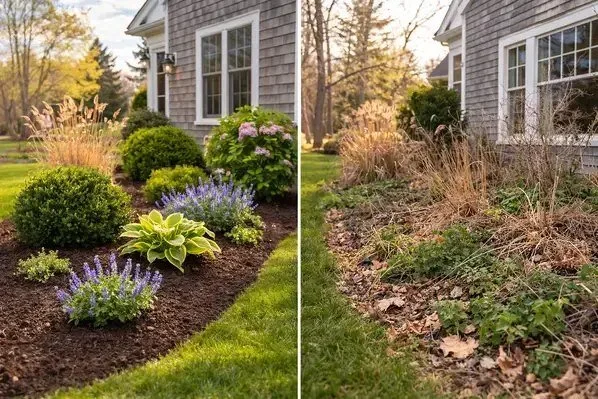
A true spring garden cleanup is maintenance, not transformation. You're working with what's already there.
Cleanup means removing dead foliage, cutting back perennials, pulling early weeds, and adding compost or a thin mulch layer. Restoration means replacing plants, rebuilding beds, amending severely depleted soil, or regrading areas where water pools. Most residential yards need cleanup. Maybe 15–20% need some level of restoration mixed in.
I've seen homeowners spend $800 on a "spring cleanup" that was really a partial restoration because their landscaper didn't explain the difference. That's not cleanup. That's a project. If you're unsure where your property falls, a quick garden care consultation can save you from paying for work that doesn't match your situation.
Here's how to tell the difference quickly.
| Task | Cleanup | Restoration |
| Dead plant removal | Cut back, rake, compost | Remove and replace dead plants |
| Weeding | Pull young weeds by hand | Treat deep-rooted invasives |
| Soil work | Top-dress with 1" compost | Full amendment based on soil test |
| Pruning | Remove dead/damaged wood | Reshape overgrown or neglected plants |
| Mulch | Refresh thin spots (1–2") | Strip and re-mulch entire beds (3–4") |
| Typical cost | $100–$300 | $600–$1,500+ |
Should You Remove All Garden Debris in Spring?
No. Remove diseased debris immediately. Leave the rest alone (for now).
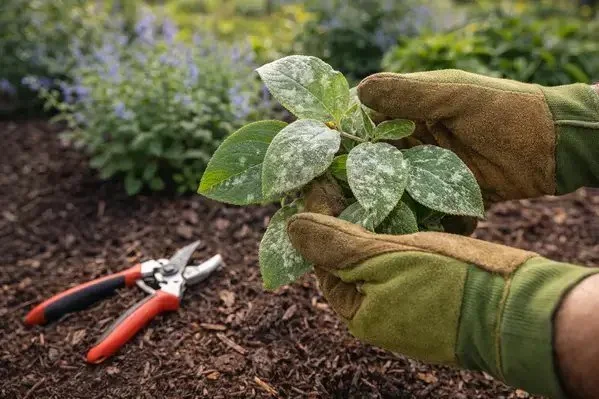
This is the one task with no room for debate. Any plant material showing signs of fungal disease, bacterial infection, or insect egg masses needs to go before temperatures warm up. Powdery mildew spores, leaf blight, and overwintering pest eggs don't disappear over winter. They wait. And as soon as the weather cooperates, they reinfect everything nearby.
Bag diseased material separately. Don't compost it. Most home compost piles don't reach the 140–160°F temperatures needed to kill pathogens (that's a fact most composting guides gloss over). The EPA recommends non-chemical pest control first, which starts with removing contaminated material before it spreads.
Clean your pruning tools with rubbing alcohol or a 10% bleach solution between cuts. I know, it's tedious. But I've watched a single pair of dirty shears spread black spot through an entire rose bed in one afternoon. One wipe between plants is cheaper than replacing six bushes.
Why You Shouldn't Strip Your Garden Beds Bare
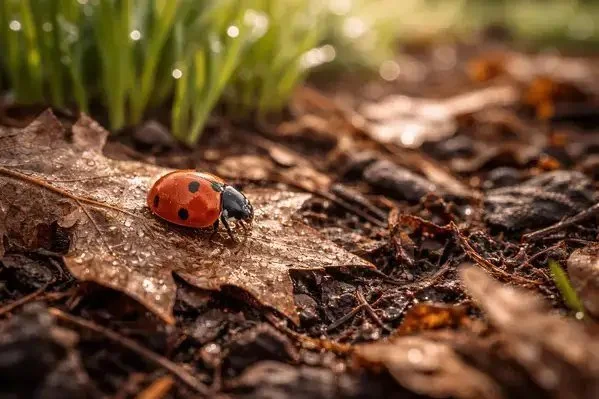
A layer of fallen leaves and small twigs on your beds isn't laziness. It's free mulch, free insulation, and free pollinator habitat.
Native bees, ladybugs, and lacewings overwinter in leaf litter and hollow stems. The University of Wisconsin's Arboretum research on spring plants and pollinators shows that removing all debris before daytime temperatures consistently hit 50°F kills beneficial insects before they emerge. You're essentially throwing away your garden's pest control crew.
The contrarian take here: the "tidy garden" aesthetic that dominates social media is bad for your plants. Not debatable. Stripping beds bare in March exposes soil to temperature swings, increases weed germination (seeds need light), and removes the organic matter that feeds soil biology.
What to do instead: wait until daytime temps hold above 50°F for about a week. Then thin debris rather than removing it all. Rake gently around emerging perennials and bulbs. Move excess leaves to areas where extra ground cover would help. This takes half the time of a full strip-and-haul, and your garden will thank you for it.
When Should You Prune Perennials and Shrubs in Spring?
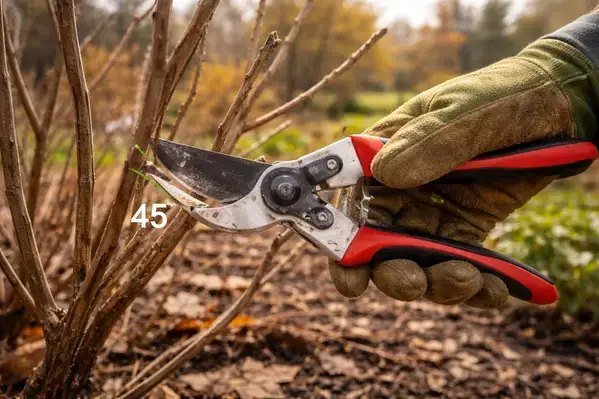
Prune after the last hard frost, not at the first warm weekend. The timing matters more than the technique. In the Northeast, that often means mid-April or later. In the Southeast, you might start in early March. Your local frost date determines the window, not the calendar.
Start with dead wood. If it snaps cleanly and shows no green inside, cut it. Ornamental grasses and perennials left standing through winter can be cut to 4–6 inches. Shrubs that bloom on new wood (butterfly bush, some hydrangea varieties, crape myrtle) respond well to aggressive early-spring pruning because it pushes more flower-producing growth.
But here's where most people get into trouble.
What Plants Should You Never Prune in Spring?
Shrubs that flower on old wood form their buds during the previous season. Pruning them in spring literally cuts off this year's blooms.
The list: bigleaf hydrangeas (the macrophylla types like 'Endless Summer'), forsythia, lilacs, azaleas, and rhododendrons. If your neighbor's forsythia is covered in yellow flowers and yours has three sad blooms on the bottom branches, bad spring pruning is almost always the reason.
For these plants, only remove dead or clearly damaged branches in spring. Save real pruning for right after they finish flowering. That gives them a full season to set next year's buds.
And if you're not sure? Don't prune. Seriously. A slightly shaggy shrub with flowers beats a clean-cut one with none.
How Early Should You Start Pulling Weeds?
As soon as you see them. This is the one spring garden cleanup task where earlier is always better.
Young weed seedlings pull out in seconds, especially after a light rain. Wait two weeks and those same weeds have root systems that fight back. I've tracked this across dozens of client properties over the years: 10–15 minutes of weeding per visit in March and April eliminates roughly 80% of the summer weed burden. Skip those early sessions and you're looking at hours of work by June.
Focus on perennial weeds first. Dandelions, creeping charlie, and bindweed won't stop coming back if you leave even a fragment of root behind. Pull the entire root. For annual weeds, a sharp hoe just below the soil surface works faster than hand-pulling and disturbs less soil.
This is an area where professional garden maintenance pays for itself. A trained gardener catches invasive weeds that most homeowners walk right past. Garlic mustard, Japanese knotweed, and mile-a-minute vine all look harmless when they're small. By the time you realize what they are, removal gets expensive.
How Much Mulch Should You Apply in Spring?
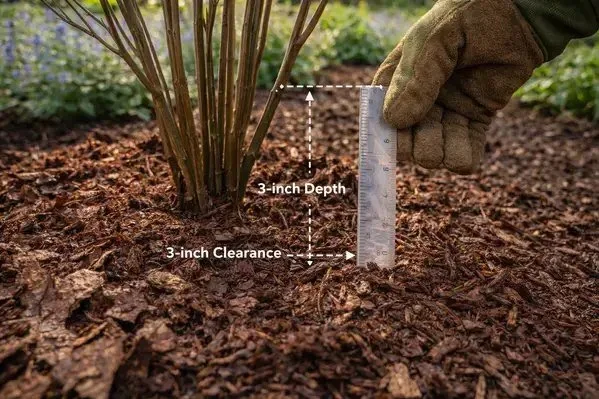
Two to four inches total depth. Not two to four inches of new mulch on top of whatever's already there.
This is maybe the most common mistake I see. Homeowners pile fresh mulch every spring without checking what's underneath, and within a few years they've got 8–10 inches of decomposing material smothering root systems and trapping moisture against stems. That creates the exact rot and disease conditions you're trying to prevent.
Before you spread anything, scrape back the existing mulch and check depth. Most beds only need a 1–2 inch refresh. Keep mulch 3–4 inches away from plant stems and tree trunks (the "mulch volcano" you see around street trees is slowly killing them). And use a natural mulch, not dyed. The dye doesn't harm plants directly, but dyed mulch is often made from recycled wood that may contain contaminants.
For garden beds with emerging bulbs and perennials, wait until those shoots are clearly visible before mulching so you don't bury them.
Does Your Soil Actually Need Amending This Spring?
Probably. But not the way most people do it.
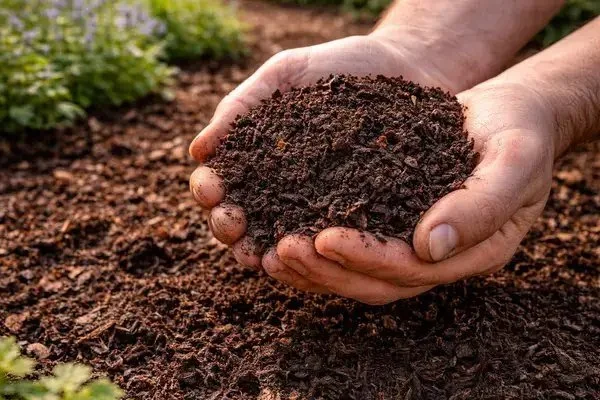
A one-inch layer of compost worked into the top few inches of soil is the single best thing you can do for plant health. Compost feeds microorganisms, improves drainage in clay soils, increases water retention in sandy soils, and provides slow-release nutrients. It does more per dollar than any fertilizer on the shelf.
The mistake: reaching for synthetic fertilizer instead. High-nitrogen chemical fertilizers push soft, rapid growth that's more vulnerable to frost damage and pest problems. The BLS reports grounds maintenance is a 1.3-million-job industry, and most pros I've talked to say the same thing. Compost first. Test your soil. Only add specific amendments if the test shows a deficiency.
For established perennial beds, don't dig. Side-dress compost around plants and let earthworms do the mixing. Digging disrupts root networks and brings weed seeds to the surface.
What Spring Garden Debris Should (and Shouldn't) Go in Your Compost?
Compost everything that's healthy. Exclude everything that isn't. That's the entire rule.
Dead leaves, dried stems, small twigs, and spent annuals are all fair game. Aim for a roughly 3:1 ratio of brown (carbon-rich) to green (nitrogen-rich) material. Shred larger pieces with a mower or pruners to speed breakdown.
What stays out: anything diseased (as we covered above), weeds that have gone to seed, persistent-root weeds like bindweed, plants treated with herbicides, and any non-plant material. I know that sounds obvious, but I've pulled plastic plant tags, twist ties, and even a garden glove out of client compost piles.
You don't need a fancy tumbler or three-bin system. A basic pile in a back corner works. Turn it when you remember, keep it damp, and you'll have usable compost in 6–12 months. A passive cold pile takes longer but still produces results.
Don't Forget Your Hardscaping During Spring Cleanup
Paths, patios, and retaining walls take a beating over winter. Freeze-thaw cycles shift pavers, crack mortar, and create trip hazards.
Sweep accumulated debris from hard surfaces. Check joints between pavers for soil buildup and weed infiltration. A pressure washer removes winter grime from stone and concrete, but use gentle pressure on softer materials like brick and wood. And check for structural issues: loose pavers, cracked steps, leaning retaining walls. These are safety problems, not cosmetic ones.
Clean bird baths and feeders with a diluted bleach solution to prevent disease spread. Test your irrigation system before the growing season by running each zone and checking for cracked heads, leaks, and misaligned spray patterns. If your landscape needs more than spot repairs, that's a sign you've crossed from cleanup into restoration territory.
Garden furniture should be cleaned based on material. Teak needs light sanding and oil. Metal needs rust treatment. Resin needs soap and water. Don't skip this. Furniture that looks fine in March can be unsalvageable by June if mold gets established.
When Does Spring Garden Cleanup Become a Restoration Project?
This is the question most articles dodge. Here's a straight answer: if more than 30% of your plants are dead, missing, or severely overgrown, you're not doing cleanup. You're doing garden restoration. If your soil is compacted, waterlogged, or infested with invasive species across entire beds, that's restoration. If your beds haven't been touched in 3+ years, that's probably restoration.
The cost difference is real. Cleanup runs $100–$300 for a typical quarter-acre lot (Angi, 2026). Restoration can run $600–$1,500 or more depending on scope. Harvard's Joint Center for Housing Studies found that landscaping projects averaged $3,698 per household in their 2025 housing report, but that figure includes everything from basic maintenance to full landscape overhauls.
The honest advice: don't try to turn a restoration into a cleanup by cutting corners. I've seen it backfire repeatedly. Spreading mulch over invasive-weed beds doesn't fix the weed problem. Fertilizing depleted soil without testing it wastes money. Pruning dead shrubs doesn't bring them back.
If your property needs restoration, own that and plan accordingly. Work with a team that understands seasonal timing and phased approaches so you're not paying for everything at once.
How Much Does Spring Garden Cleanup Cost in 2026?
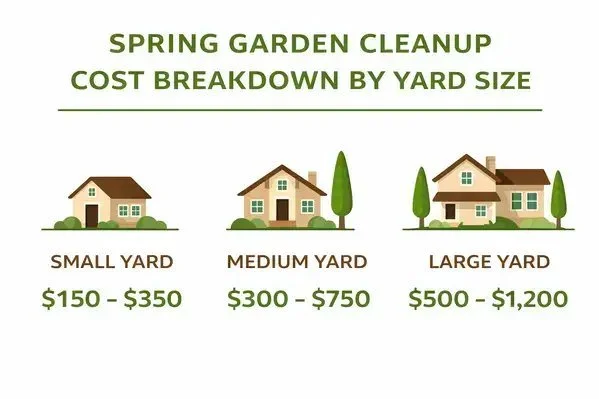
Here's what you're looking at nationally, according to Angi's March 2026 cost data.
| Service / Yard Size | Cost Range |
| Spring cleanup (national avg) | $100–$300 |
| Garden bed cleanup (hourly) | $45–$75/hr |
| 1/4 acre yard | $225–$400 |
| 1/2 acre yard | $430–$700 |
| 1 acre yard | $850–$1,100 |
| Full restoration (varies) | $600–$1,500+ |
Regional variation matters too. Northeast yard cleanups average $440 (New York) to $340 (Pennsylvania). West Coast runs higher at roughly $520 in California. Midwest and Southwest markets cluster around $330. Spring-specific work typically comes in 20–40% below these full-year averages because there's less leaf volume than fall.
DIY saves $100–$300 in labor but costs you 8–20 hours of weekend time and carries the risk of pruning mistakes or missed disease. If your time is worth more than $15–20 an hour, hiring a pro breaks even or saves money.
Should You Fertilize During Spring Garden Cleanup?
Only after a soil test. And only with organic or slow-release products.
The fertilizer industry wants you to spread granular fertilizer across everything the moment the snow melts. That's great for their sales numbers and terrible for your garden. Early synthetic fertilizer pushes tender growth that can't survive a late frost, and excess nitrogen runs off into waterways.
If you want to know what your soil actually needs, a $15–25 soil test through your local county extension office gives you specific numbers instead of guesses. Most established gardens in reasonably healthy soil don't need heavy fertilizing. Compost handles it.
For vegetable gardens, moderate organic fertilizer worked in at planting time makes sense. But even there, compost plus a light application of balanced organic fertilizer outperforms heavy synthetic applications every time. I've tested this side by side across client properties for years. The compost-first beds produce more and have fewer disease problems.
When Should You Start Spring Cleanup by Region?
Timing is everything, and national advice is borderline useless for this question.
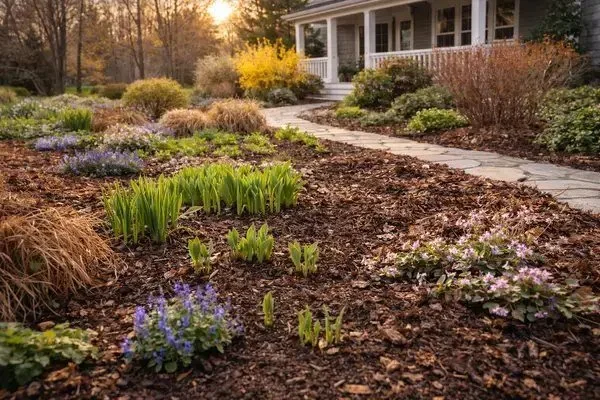
In Rhode Island and the broader Northeast, mid-April is the realistic start date for most spring garden cleanup tasks. Wait until soil temps hold above 55°F and ground isn't spongy from snowmelt. Properties that were professionally designed for seasonal transitions handle this shift more gracefully because the plant palette was chosen with dormancy in mind.
Southeast crews can start in late February or early March, but watch for unexpected late freezes. Southern soil warms faster but also dries faster, so water management becomes part of your cleanup checklist.
Midwest properties deal with the widest temperature swings. Don't touch anything until nighttime temps stay above 40°F consistently. Compacting wet, cold soil does more damage than waiting an extra two weeks.
West Coast timing varies wildly by microclimate. Coastal California is different from the Sierra foothills. Use soil temperature, not air temperature, as your guide.
The One Spring Garden Cleanup Mistake That Costs the Most
Cleaning too early. Not cleaning wrong, not using the wrong products. Just starting before the soil and weather are ready.
Industry forums are full of professionals who say the same thing: aggressive early cleanup on frozen or waterlogged ground leads to root damage, compaction, and replanting costs that easily hit $500–$2,000. According to the National Association of Landscape Professionals, the U.S. landscaping market reached $188.8 billion in 2025. A huge chunk of that spend goes to fixing preventable damage from poorly timed spring work.
Wait for the right conditions. Prioritize diseased debris removal, gentle pruning, and compost. Skip the aggressive raking, the early fertilizer, and the mulch mountains. If your property genuinely needs restoration, budget for it honestly instead of pretending cleanup will fix it. That single shift in thinking will save you more money and frustration than any spring garden cleanup checklist ever will.
FAQs
How much does spring garden cleanup cost?
A basic spring garden cleanup costs $100–$300 nationally for a standard residential yard, according to Angi's 2026 data. Garden bed cleanup runs $45–$75 per hour. Larger properties (1 acre+) can reach $850–$1,100. These figures cover debris removal, light pruning, and basic bed maintenance.
When is it too late for spring garden cleanup?
In northern climates, mid-May still works but you've missed the ideal soil-warming window. Southern regions may be past peak by then. The best results come when soil temperatures hold above 55°F and the last hard frost has passed, which varies by zip code.
Should I rake all the leaves out of my garden beds in spring?
No. Leave a light layer of debris until daytime temperatures consistently reach 50°F+. Leaf litter provides habitat for beneficial insects like native bees and ladybugs. The University of Wisconsin Arboretum's pollinator research supports waiting before removing natural ground cover.
What is the difference between spring garden cleanup and garden restoration?
Cleanup is routine seasonal maintenance: removing dead material, light pruning, weeding, and adding compost. It costs $100–$300. Restoration involves replacing dead plants, treating invasive species, rebuilding beds, or amending severely depleted soil, and typically costs $600–$1,500+.
Is spring garden cleanup cheaper than fall cleanup?
Yes. Spring cleanup averages $100–$300 compared to fall cleanup at $200–$500. The difference comes down to leaf volume. Fall generates significantly more debris, which increases labor and disposal time.
Should I fertilize my garden during spring cleanup?
Only after a soil test and once soil temperatures exceed 55°F. The EPA recommends non-chemical approaches first. Most established gardens perform better with a one-inch layer of compost than with synthetic fertilizer applied too early.
Can I do spring garden cleanup myself or should I hire a professional?
DIY saves $100–$300 in labor but costs 8–20 hours of weekend time. Professionals include disposal, equipment, and expertise in identifying diseases and invasive species. If your time is worth more than $15–20 per hour, hiring out breaks even or saves money.
