
Preparing Estate Gardens For Spring Growth
Preparing your garden for spring comes down to a handful of tasks done at the right time, in the right order. Cut back dead perennials, clear winter debris, test your soil, mulch your beds, and get evergreens in the ground before the heat arrives. Skip any of those, and you're playing catch-up all summer.
Spring garden prep is the single biggest factor in how your yard performs from May through October. A garden that gets proper attention in late February through early April needs roughly 40% less maintenance during peak growing season. I've watched homeowners dump money into summer plantings that fail because nobody bothered with basic prep work three months earlier. The national landscaping services market hit $188.8 billion in 2025, according to IBISWorld data cited by the National Association of Landscape Professionals. That number tells you something. People are spending real money on their outdoor spaces, and the ones who spend it on spring prep get far more out of every dollar than those who wait until June to panic.
This article won't cover vegetable garden planning, indoor seed starting, or irrigation system installation. Those are separate topics that deserve their own space.
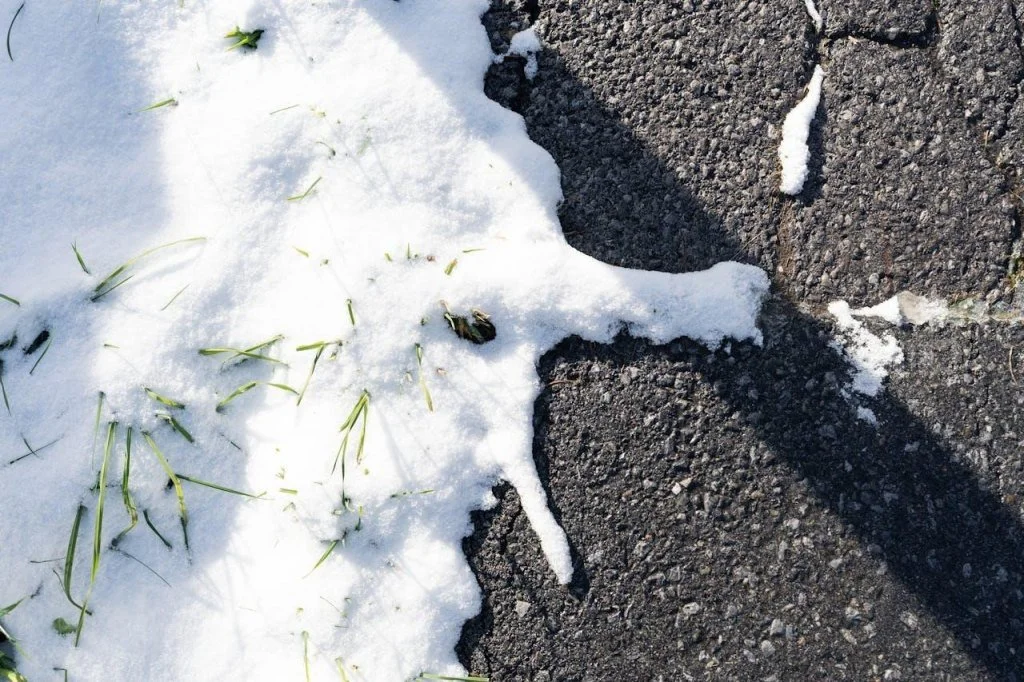
Why Does Spring Prep Set the Tone for Your Entire Growing Season?
Winter leaves behind compacted soil, broken branches, fungal buildup, and weakened root systems. If you don't address those issues before new growth kicks in, your plants are starting the season already behind.
Here's what most people get wrong. They treat spring prep like a checklist of chores. It's not. It's triage. You're assessing damage, removing what's dead, and giving surviving plants the conditions they need to recover fast. The Harvard Joint Center for Housing Studies found that high-income homeowners put roughly 15% of their remodeling budgets toward outdoor property improvements in 2025. That's a big allocation, and it only pays off when the foundation (your spring prep) is solid.
Professionally maintained gardens that get proper spring attention tend to require fewer emergency interventions. That means less money on plant replacements, less time on pest problems, and a yard that actually looks good when you want to use it.
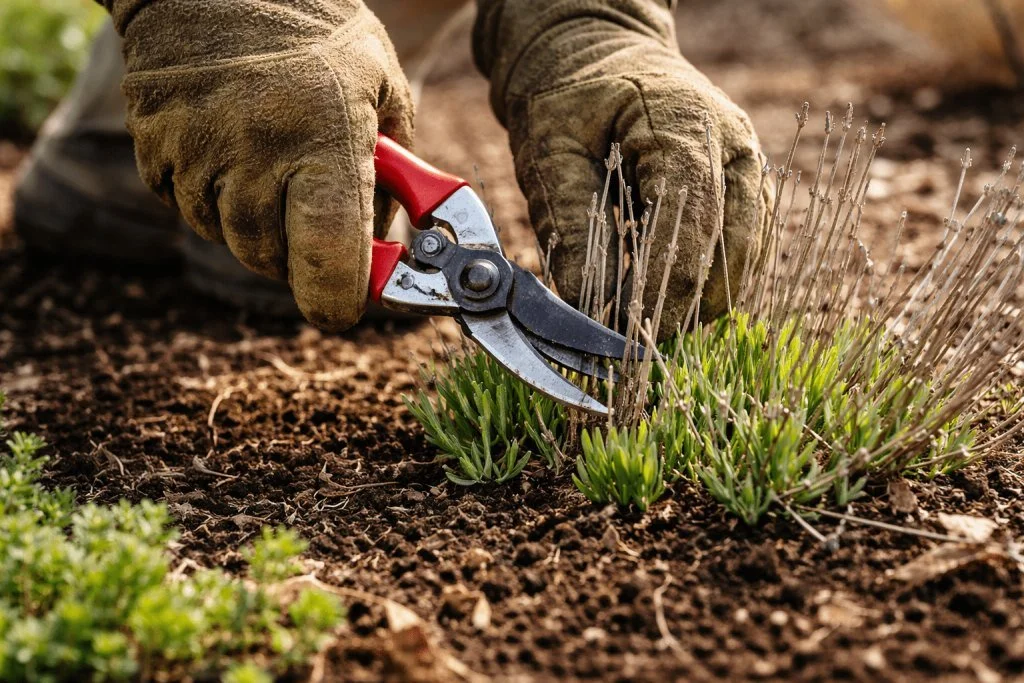
How Should You Cut Back Perennials and Ornamental Grasses?
Start here. Dead stems from last year's perennials block sunlight and trap moisture against the crown of the plant, which invites rot.
Use clean, sharp shears and cut herbaceous perennials (lavender, salvia, sedum, rudbeckia, echinacea) back to about 2-3 inches above the soil line. The timing matters more than most guides admit. In Rhode Island, you're typically safe to start in mid-March, but watch for new shoots emerging at the base. If you see green growth, cut immediately. Waiting another two weeks means you'll damage new stems trying to work around them.
Ornamental grasses get the same treatment. Cut them to about 4-6 inches. One thing I'll push back on: the popular advice to leave dead grass standing "for winter interest." For estate-scale gardens, that dead material becomes a maintenance headache by March. Cut it back, compost it, move on.
Clearing Winter Debris From Garden Beds
This sounds basic, and it is. But a surprising number of homeowners skip this or do it halfway. Fallen leaves, broken branches, and dead plant material create a damp layer that breeds fungal diseases.
Focus on flower beds first, then lawn edges, pathways, hardscape areas, and the drip line around trees and shrubs. Don't just rake the surface. Pull back matted leaves that are pressed against soil, especially around established trees and shrubs. Moss buildup on patios and stone paths should be scraped or pressure-washed before the growing season buries it under new organic matter.
Does Mulching Actually Make That Big a Difference?
Yes. And it's probably the single highest-ROI task on this list.
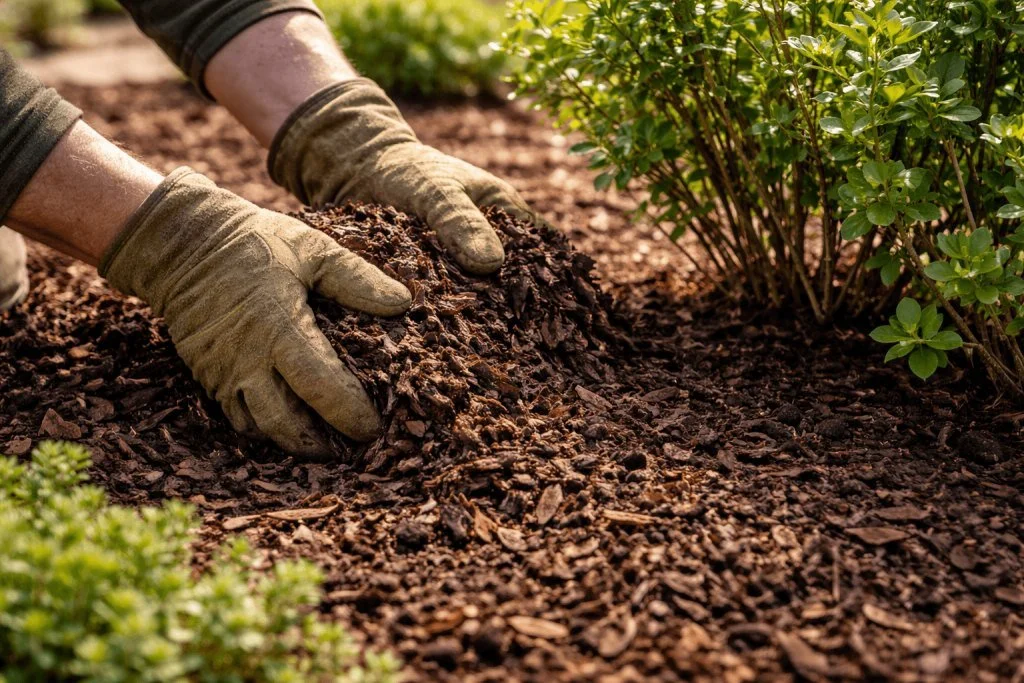
A 5-8cm (2-3 inch) layer of organic mulch conserves soil moisture, suppresses weeds, regulates soil temperature, and feeds the soil as it breaks down. Bark mulch and wood chips run roughly $3-$5 per bag. Compost costs $20-$50 per cubic yard but gives you both mulching benefits and soil amendment in one application. University extension research suggests compost-amended beds improve plant growth by 20-30% compared to unamended soil.
Spread mulch around plants but keep it away from stems and trunk bases. Piling mulch against bark (the "mulch volcano" you see everywhere) holds moisture against the cambium and causes rot. It's one of the most common landscaping mistakes and it kills more trees than most people realize.
When Should You Plant Evergreen Shrubs?
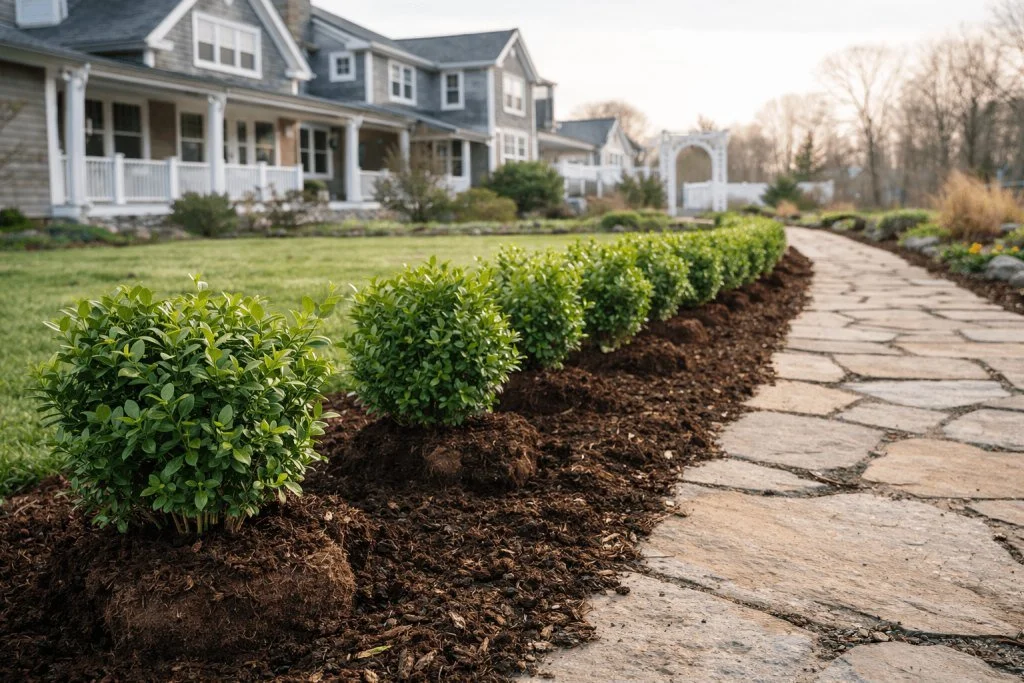
Late March through mid-April is the window in the Northeast. Soil temperatures are climbing, but the heat hasn't arrived. That gives roots 6-8 weeks to establish before summer stress hits.
Evergreens like Portuguese laurel, boxwood, photinia, pittosporum, and hebe provide year-round structure. They're also the backbone of any serious landscape design because they hold visual weight even when everything else has gone dormant.
Make sure the planting hole is twice the width of the root ball and the soil drains well. Enrich backfill with compost. And here's the step almost nobody does: test your soil pH before planting. A $20-$50 soil test from your local extension office will tell you if your amendments are actually helping or making things worse. Skipping this step is the most expensive mistake in spring garden prep. Plants fail, you replace them, and the cycle repeats.
Are Your Hardwood Cuttings Still Alive?
If you planted hardwood cuttings last fall or winter, early spring is when you find out whether they took.
Check for new buds or shoots. If you see green growth, the cutting has rooted. Move successful cuttings to larger containers or transplant them into prepared beds. Failed cuttings should be pulled and composted. Don't waste bed space on dead wood hoping for a miracle.
Should You Repot Houseplants in Spring?
Spring repotting isn't just about outdoor spaces. Indoor plants respond to the same seasonal cues, longer daylight and rising temperatures, and this is when they're primed for a growth push.
Signs a houseplant needs repotting: roots poking out of drainage holes, soil drying out within a day of watering, and visibly slowed growth. Go up one pot size only. Jumping too many sizes shocks the root system and can cause waterlogging. Match the compost type to the plant. Tropical plants, succulents, and orchids all need different mixes. Professional in-home plant assessments can help if you're dealing with a large collection or high-value specimens.
Getting Your Garden Tools Ready
Dull pruning shears crush stems instead of cutting them, which opens wounds to disease. Spend 30 minutes before the season starts.
Clean all blades with a wire brush and wipe with rubbing alcohol. Sharpen pruning shears, loppers, and hoe blades. Oil pivot points and moving parts. Replace cracked handles before they snap mid-job. It's boring work, but clean cuts heal faster. Your plants will show the difference by midsummer.
What Does Your Lawn Need After Winter?
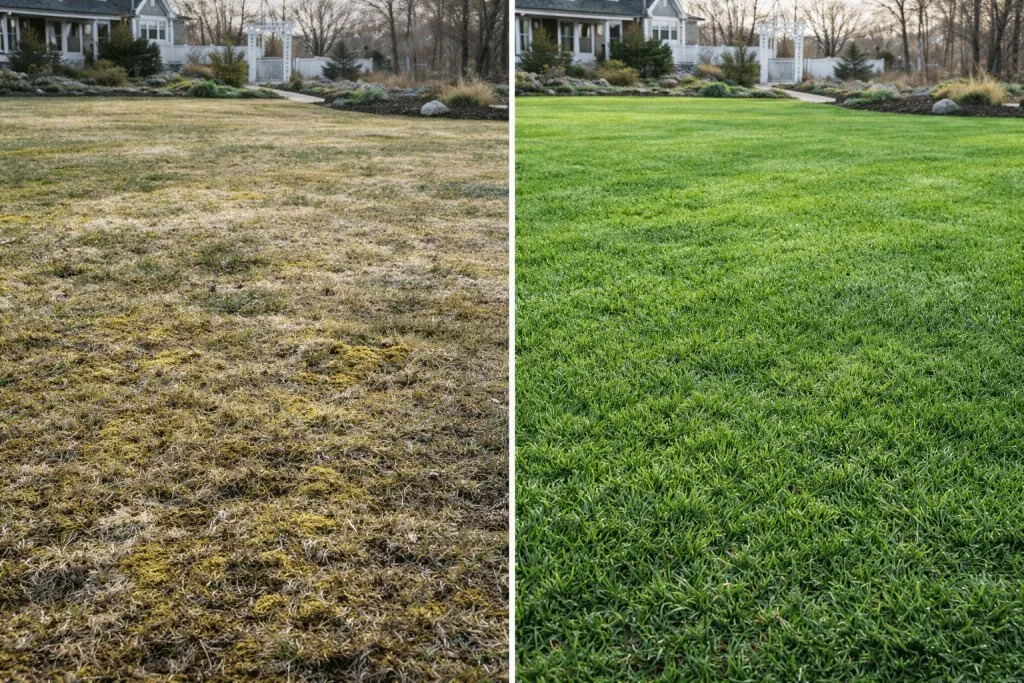
Most lawns in the Northeast come out of winter looking rough. Frost heave, waterlogging, and limited sunlight leave behind compacted soil, dead patches, and moss.
Rake out thatch and dead grass first. Then aerate compacted areas (a core aerator works best on clay-heavy Rhode Island soils). Overseed thin spots and apply a spring-specific lawn feed. Edge along beds and pathways for a clean separation between turf and planting areas. Sharp edges don't just look better; they create a physical barrier that slows grass from creeping into your beds.
Planning Bigger Garden Projects for 2026
Spring is when homeowners start thinking about patios, raised beds, outdoor kitchens, pergolas, pools, and new planting schemes.
If you're planning a larger project, start design conversations now. Professional landscapers book out quickly once the season hits, and a project that starts in March or April will be finished and usable by the time you actually want to enjoy your yard. Waiting until May puts you at the back of the line. The landscaping industry added roughly 33,000 new businesses in 2025 alone (IBISWorld), which tells you demand is there. Get ahead of it.
When Professional Landscaping Makes Sense
You can handle most spring prep tasks yourself. But there's a break-even point where DIY stops saving money and starts costing it.
For properties over a quarter acre with established planting beds, the math changes. DIY spring cleanup costs $50-$200 in materials but takes 8-20 hours of labor. A professional crew knocks out the same work in a day, brings expertise on soil conditions and plant health, and many offer a one-season plant warranty. The NALP's January 2026 economic forecast projected mild to moderate industry growth in 2026, with increased emphasis on climate-resilient practices. That shift matters. The pros who know how to match seasonal care to your specific property will save you replanting costs down the road.
Working with an experienced team that understands your market can also help you identify which investments pay off and which ones don't.
Preparing your garden for spring isn't complicated. Test your soil. Cut back the dead growth. Mulch your beds. Get evergreens in the ground. The homeowners who do these things in March spend less time, less money, and far less frustration than those who skip straight to summer planting and wonder why nothing thrives.
Consistency beats intensity. A garden prepped properly once in early spring will outperform one that gets sporadic bursts of attention all year long.
Frequently Asked Questions
Should I test my soil before adding spring amendments?
Absolutely. A soil test costs $20-$50 through your local cooperative extension and tells you the exact pH, nutrient levels, and organic matter content of your beds. Skipping this step is the most common reason spring plantings fail. Dumping lime or fertilizer without data leads to nutrient imbalances that stunt growth or burn roots.
What is the best time to start spring garden prep in the Northeast?
In Rhode Island and the broader Northeast, mid-February through early April is the target window. Start with debris cleanup and perennial cutback in late February or early March, then move to mulching and planting as soil temperatures rise above 45°F. Climate shifts have pushed some of these timelines earlier by 1-2 weeks compared to a decade ago.
How does spring garden preparation affect home resale value?
Professional landscaping upgrades show 70-80% cost recovery at resale and can add 5-10% to your home's value, according to 2025 Cost vs. Value analyses. Spring prep maintains that investment. A neglected garden erodes curb appeal faster than almost any other exterior element.
Can I prepare my garden for spring myself, or should I hire a professional?
DIY works well for smaller properties. Materials run $50-$200, but expect 8-20 hours of labor on a large garden. Professional crews complete the same work in a day and bring soil expertise, proper equipment, and often a one-season plant warranty. The break-even point is usually around a quarter acre with established planting beds.
Are native plants a better choice for spring planting in 2026?
Native and drought-resistant plants are becoming the industry standard, not just an eco-friendly option. IBISWorld's 2025 industry analysis noted accelerated adoption driven by climate stress, including higher temperatures and unpredictable rainfall. Natives need less water, resist local pests, and reduce long-term maintenance costs.
What spring garden mistakes waste the most money?
The costliest mistake is skipping soil testing before amendments and planting. On estate-scale gardens, failed beds due to poor soil prep can cost thousands in plant replacements alone. The second biggest waste: aggressive spring pruning on shrubs that flower on old wood (like hydrangeas and forsythia), which removes all the season's blooms.
