
Lawn Recovery After Winter: Compaction, Snow Mold & Salt Damage
Post-winter lawn care comes down to one thing: figuring out what’s dead, what’s dormant, and what just needs a push. Most lawns that look destroyed after snowmelt are actually 70–80% dormant grass waiting for warmer soil, according to turfgrass extension research from the University of Florida.
But here’s the catch. If you rush out with fertilizer and seed before the ground is ready, you’ll burn tender roots and waste money. I’ve watched homeowners blow $500+ on early-spring fixes because they skipped the basics.
Post-winter lawn care is the process of assessing and repairing snow-related damage to your lawn each spring, including snow mold treatment, salt damage correction, soil decompaction, and reseeding dead patches. Done right, it costs $300–$800 for a basic recovery and takes 4–6 weeks to show results.
What Does Snow Damage Actually Do to Your Lawn?
Snow creates conditions underneath that cause specific, identifiable problems.
Snow mold is the most common. You’ll see circular patches of gray, white, or pink matted grass once the snow melts. Cool-season grasses like Kentucky bluegrass are especially prone when snow sits on unfrozen ground.
Salt damage is the second big issue. Road salt and de-icing products get tracked onto your lawn near driveways and sidewalks. Sodium dries out grass tissue, blocks nutrient uptake, and breaks down soil structure. Homeowners spend $70–$380 on professional fertilization to correct salt-related nutrient imbalances, according to Angi’s 2025 data.
Then there’s soil compaction from heavy snow piles and freeze-thaw cycles. It’s the invisible problem that keeps lawns from greening up even when everything else looks fine.
Warm-season grasses go dormant and turn brown, but they bounce back once temperatures stabilize. Most of the time, that brown grass isn’t dead.
Assessing Winter Damage the Right Way
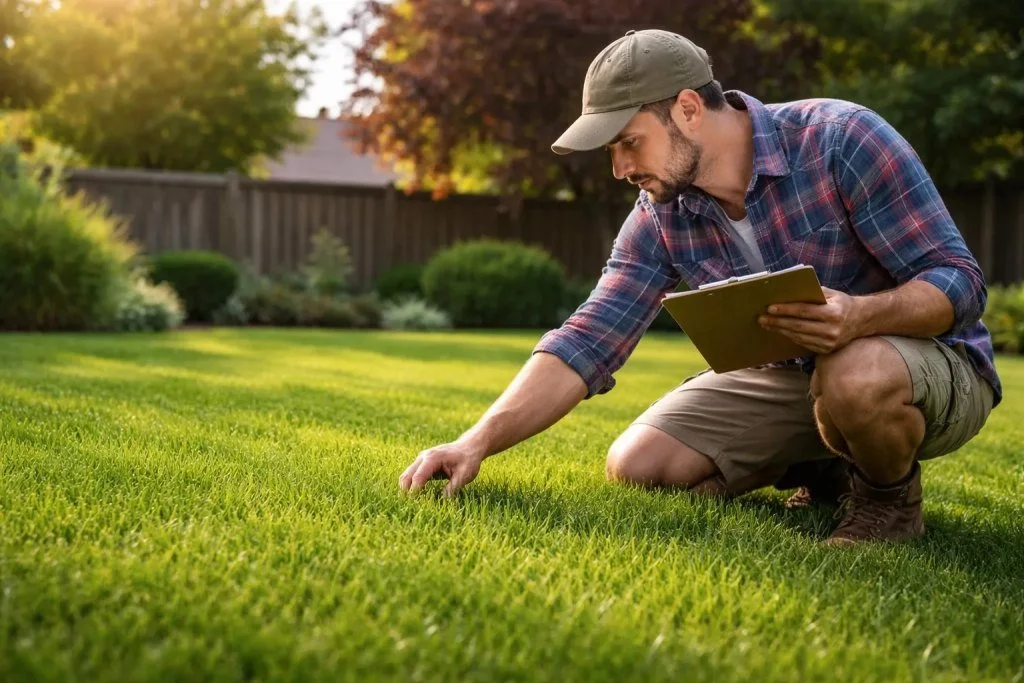
Don’t skip this step. Grab a small clump of brown grass and pull gently. If it resists, it’s dormant and alive. If it slides out with no root structure, it’s dead and needs repair.
Walk your lawn and do this test in 10–15 spots. Check near sidewalks for straw-colored streaks (salt damage). Look for circular matted patches with a mushy smell (snow mold). Note standing water, which points to compaction.
A $15 soil thermometer saves you from guessing. You want consistent readings above 50°F (10°C) before doing anything aggressive. The University of Georgia’s turfgrass specialists warn that rushing repairs into cool soil delays root regeneration and can set you back weeks. Preparing your yard properly before jumping into repairs is half the battle.
How to Repair Your Lawn After Snow Damage
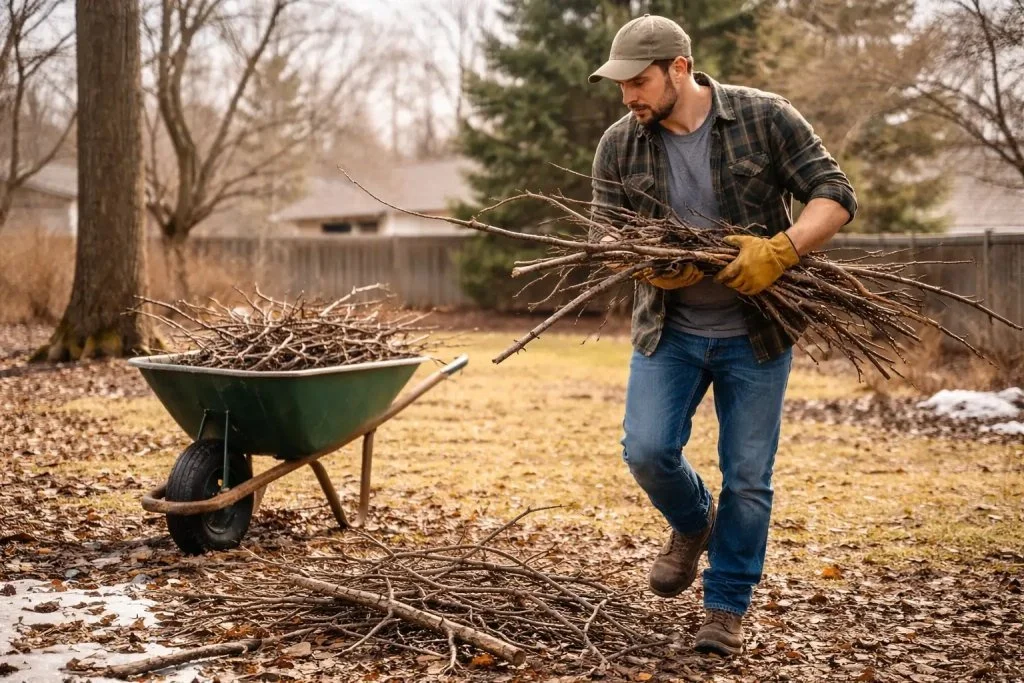
Start with cleanup. Remove fallen branches, matted leaves, and debris that smother grass and trap moisture.
For compacted soil: Core aeration pulls small plugs out of the ground, letting water and nutrients reach roots. Dethatching removes the dead organic layer on top of your soil. Both should happen before you seed. Skipping aeration before reseeding leads to poor establishment, wasted seed, and a full redo that runs $1,000+ on average.
For snow mold: Lightly rake the affected areas to break up matted grass. Most gray snow mold recovers on its own once conditions dry out. Pink snow mold is more aggressive and may need targeted fungicide.
For salt-damaged areas: Flush the soil with clean water several times over a few days to push sodium below the root zone. Salt-tolerant fescue varieties perform better in recurring trouble spots.
For dead patches: Use quality grass seed matched to your region, cover with a quarter-inch of topsoil, and apply starter fertilizer. Overseeding runs $0.04–$0.18 per square foot. Resodding costs $1.50–$4 per square foot, according to HomeGuide’s 2025 data.
Water deeply and regularly. Grass seed takes 7–21 days to germinate, and full recovery typically takes 4–6 weeks. A seasonal lawn care program takes the guesswork out of timing.
Can You Prevent Snow Damage Next Winter?
You can’t prevent all of it, but you can reduce it significantly.
Mow shorter before the first snowfall. Longer grass mats down under snow and breeds snow mold. A final cut at 2–2.5 inches reduces that risk.
Pick grass varieties that match your climate. Tall fescue and fine fescue blends handle cold, salt, and shade better than most alternatives. If you’re planning a landscape design from scratch, choosing the right turf is one of the highest-ROI decisions you’ll make.
Reduce salt exposure where you can. Switch to calcium magnesium acetate or potassium chloride instead of rock salt. Keeping your lawn healthy year-round through consistent garden maintenance builds the resilience that gets it through winter with less damage.
When Should You Start Spring Recovery?
Once the ground has thawed, you can start cleanup. But hold off on seeding, fertilizing, and aeration until soil temperatures hit 50°F (10°C).
Patience is the hardest part. UF/IFAS Extension research confirms that weak lawns in spring often result from cool soil temperatures slowing root regeneration. Significant improvement sometimes doesn’t appear until late spring.
Pricing varies by region. Northeast homeowners pay more due to longer winters, while Southeast recovery tends to be faster and cheaper. If the damage is widespread, working with a team that understands seasonal lawn recovery can save you from expensive trial and error.
Post-winter lawn care isn’t complicated. The mistake is doing too much, too early. Wait for your soil, fix what’s broken, and let dormant grass do what it’s built to do.
Frequently Asked Questions About Post-Winter Lawn Care
How can I tell if my grass is dead or just dormant after winter?
Grab a small clump and pull gently. Dormant grass resists and stays rooted. Dead grass slides out with little or no root structure. Test 10–15 spots across your lawn before making repair decisions. Extension research shows that 70–80% of brown spring lawns are dormant, not dead.
What does snow mold look like, and will it kill my lawn?
Snow mold appears as circular patches of gray, white, or pink matted grass after snowmelt. Gray snow mold rarely kills turf and typically recovers with improved airflow. Pink snow mold is more aggressive and may need fungicide treatment if patches exceed a few square feet.
When is the right time to start spring lawn recovery?
Wait until soil temperatures consistently reach 50°F (10°C). That matters more than the calendar date. Fertilizing or seeding into cold soil burns tender roots and delays recovery by weeks. A $15 soil thermometer is the best investment you’ll make.
Should I fertilize my lawn right away in early spring?
No. Early fertilization before soil warms up can damage new root growth. Wait until you see active green-up before applying fertilizer. Starter fertilizer is appropriate for newly seeded patches, but established grass should wait for consistent warmth.
Is it better to overseed or resod damaged areas?
Overseeding costs $0.04–$0.18 per square foot and works well for thinning areas, but establishment takes longer. Resodding runs $1.50–$4 per square foot and gives instant results. For patches smaller than 50 square feet, overseeding usually makes more sense financially.
Do I need to aerate before reseeding in spring?
Yes, if your soil is compacted from winter snow and freeze-thaw cycles. Aeration breaks up compaction and lets seed, water, and nutrients reach the root zone. Skipping aeration is the most common reason spring reseeding fails, often leading to a full redo costing $1,000 or more.
